
Science
Scientists Face Challenges in Using Tardigrade Protein for Space Protection

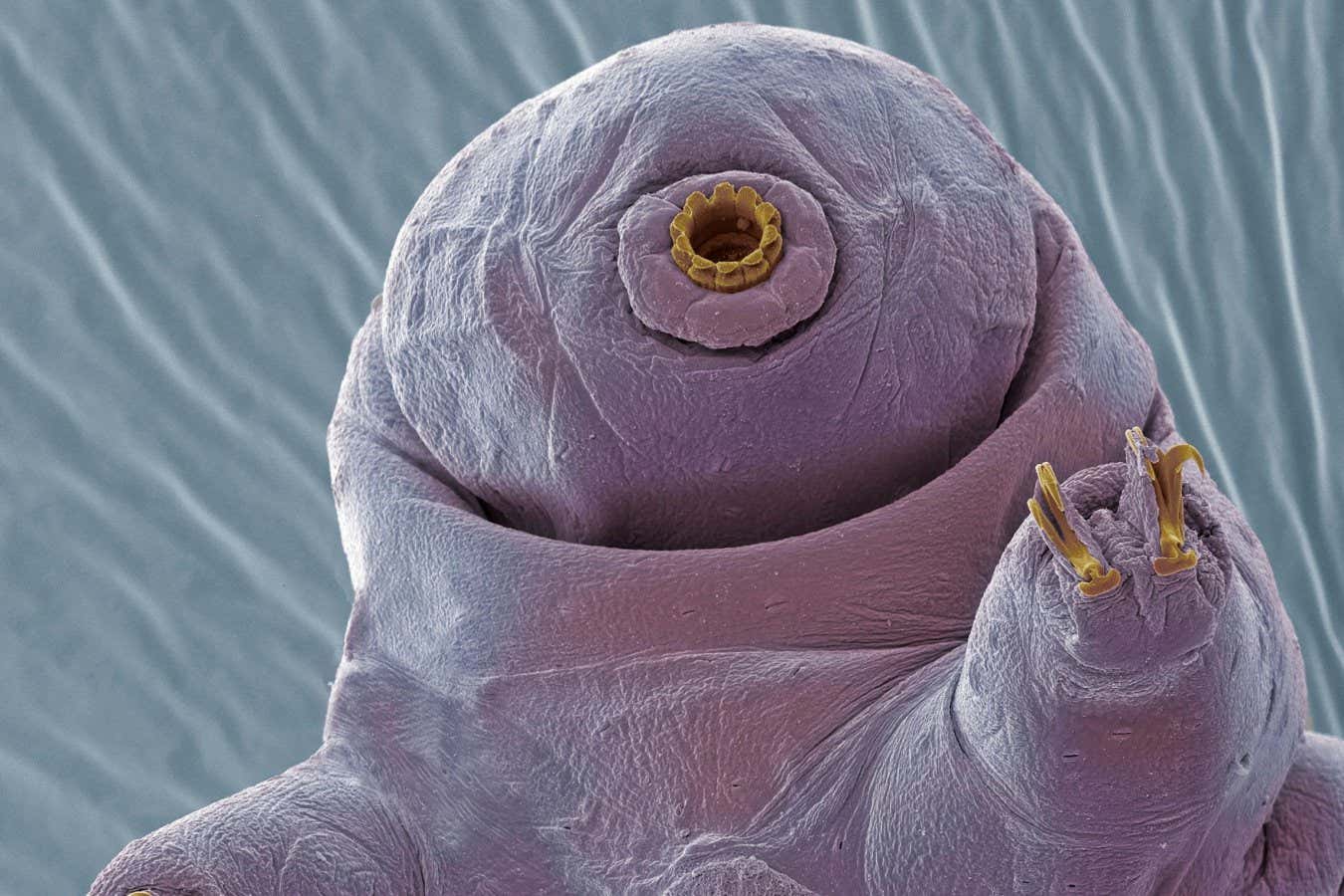
Research into how to protect astronauts from the harmful effects of cosmic radiation has encountered significant challenges. A team led by Corey Nislow at the University of British Columbia has found that while a protein produced by tardigrades—known as Dsup, short for damage suppressor—offers some protective benefits, its application in humans may not be as straightforward as previously thought.
Tardigrades are renowned for their extraordinary resilience to extreme environments, including high radiation levels, extreme temperatures, and even the vacuum of space. The idea of harnessing Dsup for human use gained traction following a 2016 study that demonstrated its protective qualities. When human cells were genetically modified to produce Dsup, they exhibited increased resistance to radiation without any apparent negative effects. This led to the proposal of using Dsup in space missions, potentially shielding astronauts from radiation and harmful chemicals by introducing Dsup-encoding mRNA, similar to the technology used in mRNA vaccines for COVID-19.
However, Nislow’s latest research indicates that the reality of using Dsup is more complex. The team conducted extensive studies on yeast cells modified to produce the protein and discovered that excessively high levels of Dsup can be detrimental, even fatal to cells. Moderate levels also impaired cell growth. Nislow elaborated that while Dsup protects DNA by forming a physical barrier, this also restricts access for proteins responsible for vital cellular processes, such as DNA replication and repair.
Balancing Protection and Toxicity
There is a fine line between beneficial and harmful levels of Dsup. Nislow emphasized the importance of producing the protein only in specific cells, and at appropriate levels, to avoid negative health impacts. James Byrne from the University of Iowa supports this view, indicating that while continuous production of Dsup across all human cells could lead to significant health issues, temporary production might have protective effects, especially in contexts like radiation therapy for cancer.
In addition, Simon Galas from the University of Montpellier pointed out that while high doses of Dsup can have toxic effects, lower concentrations have shown promise in extending the lifespan of nematode worms by mitigating oxidative stress. This suggests that more research is needed to understand the optimal conditions under which Dsup can be beneficial.
Conversely, Jessica Tyler from Weill Cornell Medicine found that at lower levels than those examined by Nislow, Dsup had positive effects on yeast cells without hindering growth. Tyler argued against the notion that Dsup’s protective benefits come at a significant cost but concurred on the necessity of precise production levels.
Future Prospects for Dsup in Space Exploration
The challenge remains in harnessing Dsup effectively for potential applications in protecting astronauts and other organisms during space missions. Current technologies do not allow for the precise control of Dsup production in the human body. However, Nislow remains optimistic, citing the substantial investment and attention directed towards developing advanced delivery systems in the pharmaceutical industry.
“There’s so much money and attention on delivery systems,” Nislow noted, highlighting the collective motivation among researchers to solve these complex challenges. As scientists continue to explore the intricacies of Dsup, they aim to unlock its full potential, which could someday lead to innovative methods for safeguarding human health in the harsh conditions of space.

Golden Link Chapter No. 204 Honors Kijahfha Mahoney with Service Award

Gigachad Price Falls to $0.0025 Amid Market Fluctuations

Exploring Bortus: The Complex Alien of ‘The Orville’

Harry Potter Quiz Links Personality Traits to Entrepreneurship

Colorado Voters React to Trump’s Immigration Actions Amid Midterms

Donaldson Capital Management Boosts Stake in UnitedHealth Group

Researchers Establish First Lab Colony of Invasive Beetle in Australia

Jersey City Schools Confirm Controversial Kindergarten Move

NeuroOne Medical Technologies Outperforms Cannlabs in Financial Metrics

University of Hawaiʻi Joins $25.6M AI Project to Monitor Disasters

Foreign Inflows into Japan Stocks Surge to ¥1.34 Trillion

Hudson Williams Gains Popularity as Breakout Star on Heated Rivalry

Boeing’s Merger with McDonnell Douglas: A Strategic Move Explained

$1.25M Grant Advances Hawaiʻi’s Real-Time Hazard Monitoring

Sydney Sweeney Embraces Body Positivity Amid Hollywood Challenges

BOYNEXTDOOR’s Jaehyun Faces Backlash Amid BTS-TWICE Controversy

French Film Explores Group Therapy in ‘Group – The Schopenhauer Project’

Urgent Farewell: Joleen Chaney Leaves Legacy at KFOR
-
Science3 months ago
University of Hawaiʻi Joins $25.6M AI Project to Monitor Disasters
-
Business3 months ago
Foreign Inflows into Japan Stocks Surge to ¥1.34 Trillion
-
 Entertainment2 months ago
Hudson Williams Gains Popularity as Breakout Star on Heated Rivalry
-
 World3 months ago
Boeing’s Merger with McDonnell Douglas: A Strategic Move Explained
-
 Science2 months ago
$1.25M Grant Advances Hawaiʻi’s Real-Time Hazard Monitoring
-
 Entertainment3 months ago
Sydney Sweeney Embraces Body Positivity Amid Hollywood Challenges
-
 Top Stories3 months ago
BOYNEXTDOOR’s Jaehyun Faces Backlash Amid BTS-TWICE Controversy
-
 World3 months ago
French Film Explores Group Therapy in ‘Group – The Schopenhauer Project’
-
 Top Stories3 months ago
Urgent Farewell: Joleen Chaney Leaves Legacy at KFOR
-

 Top Stories3 months ago
Marc Buoniconti’s Legacy: 40 Years Later, Lives Transformed
-

 Lifestyle4 months ago
Kelsea Ballerini Launches ‘Burn the Baggage’ Candle with Ranger Station
-

 Top Stories3 months ago
Carson Wentz Out for Season After Shoulder Surgery: Urgent Update