
Science
NIH Funding Cuts Impact Hundreds of Early-Career Scientists

The National Institutes of Health (NIH) has suspended funding for the MOSAIC program, leaving hundreds of early-career scientists without essential financial support. This program was designed to aid researchers in the critical transition from postdoctoral positions to independent lab leadership. The abrupt termination, influenced by the Trump administration’s directive to eliminate diversity, equity, and inclusion (DEI) initiatives, has triggered widespread concern about the future of scientific research in the United States.
The MOSAIC program, which stands for Maximizing Opportunities for Scientific and Academic Independent Careers, aimed to address two significant challenges: the lack of diversity among NIH-funded researchers and the insufficient career prospects for postdoctoral scientists. Under this initiative, funding of up to $125,000 per year was allocated for two years of postdoctoral research, followed by up to $249,000 annually for three years as a tenure-track professor. The program was particularly focused on individuals from disadvantaged backgrounds, offering them a pathway to establish their own labs.
In its early months, the NIH under Director Jay Bhattacharya publicly emphasized the importance of nurturing emerging biomedical scientists. However, this focus was overshadowed by the termination of the MOSAIC program, which affected 104 researchers, according to Grant Witness, an independent project tracking NIH grant terminations. Some researchers have seen their funding reinstated temporarily due to court orders, but many still face uncertainty.
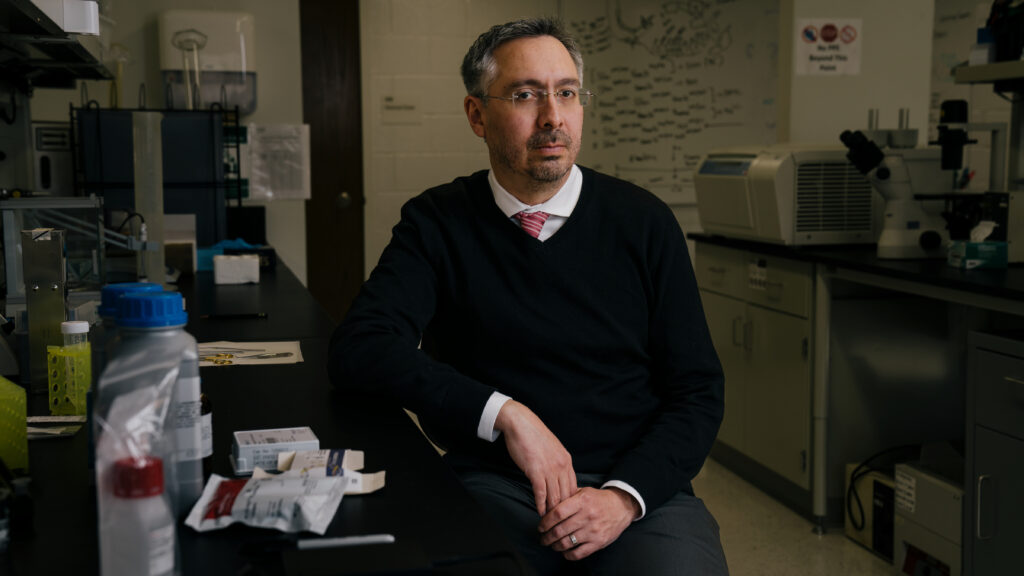
Luis Rodriguez, a molecular biologist who began his lab at George Washington University in 2024, relied heavily on the anticipated $160,000 MOSAIC grant to support his research on lung disease. He expressed feelings of betrayal, having been encouraged to apply for the MOSAIC funding only to see it canceled. “I think everyone has their own horror story,” he remarked, highlighting the emotional and professional toll of these cuts.
Data from a STAT analysis indicates a broader decline in NIH funding, with 172 fewer transition grants awarded to postdoctoral researchers in the nine months leading to the government shutdown compared to the previous year. In total, the NIH issued 896 fewer new early-career grants across all categories, marking a significant setback for the scientific community.
Bhattacharya stated that the NIH is recalibrating its funding strategy to emphasize what he described as “gold-standard science” over what he termed “politicized DEI ideology.” Despite this stance, experts warn that the decline in early-career support could jeopardize the future of the scientific workforce.
Tara Schwetz, a former NIH deputy director, expressed concern about the long-term implications of these funding cuts on scientists in training. “The interest is shifting in the wrong direction, and I don’t think that’s good for the country,” she said, underscoring the potential loss of talent in the scientific field.
The MOSAIC program had been a crucial resource for early-career researchers, particularly those from underrepresented backgrounds. Michael Sesma, who helped establish the program, remarked on its success in promoting diversity and inclusion within academia. He emphasized that the program attracted talented individuals who may otherwise have been overlooked due to systemic biases.
The decision to terminate MOSAIC has left many researchers scrambling for alternative funding opportunities. Rodriguez, for example, has had to scale back his hiring plans and reconsider his research goals. Originally aiming to recruit two postdoctoral researchers and two lab technicians, he is now limited to hiring just one technician and one postdoc. This reduction in resources hampers his ability to achieve his research objectives.
The program’s elimination has also affected researchers like Sarah Vick, who was in the postdoctoral phase of her MOSAIC award. She was counting on the funding to sustain her work on immune responses to infections. “Having no NIH funding makes me a less appealing job candidate,” Vick noted, indicating that her prospects in an already competitive job market have been further diminished.
The NIH’s actions have sparked a wider dialogue about the need for continued support for early-career scientists. Critics argue that the abrupt elimination of programs like MOSAIC reflects a lack of understanding about the importance of nurturing diverse talent within the scientific community.
While the MOSAIC program has been removed from the NIH website, the consequences of its termination are still unfolding. Although a federal judge ruled that the NIH’s funding cuts constituted discrimination, the ruling has not provided relief to all affected researchers. The broader implications of these funding cuts may hinder the progress of science in the United States, potentially stifling innovation and limiting the diversity of thought essential for scientific advancement.
As the scientific landscape evolves, experts continue to advocate for a supportive environment for early-career researchers. The future success of the scientific workforce hinges on the ability to cultivate talent and foster an inclusive atmosphere where all researchers can thrive.

NeuroOne Medical Technologies Outperforms Cannlabs in Financial Metrics

Nevada Bankers Prepare for 2026 Challenges Amid Changing Landscape

Radian Group vs. Principal Financial: An In-Depth Stock Analysis

Clive Davis Gala Honors Ozzy Osbourne as Stars Shine Bright

Sun Valley Music Festival Reveals Star-Studded Lineup for 2026

February Insights for Cancer: Emotions Surge and Transform

Tigers Clinch Victory Over Riverhawks, Keep No. 2 Seed Hope Alive

Urgent: Arson Fire Causes $50,000 Damage in Mililani Business

KraneShares California Carbon ETF Sees Major Surge in Short Interest

University of Hawaiʻi Joins $25.6M AI Project to Monitor Disasters

Foreign Inflows into Japan Stocks Surge to ¥1.34 Trillion

Hudson Williams Gains Popularity as Breakout Star on Heated Rivalry

Boeing’s Merger with McDonnell Douglas: A Strategic Move Explained

$1.25M Grant Advances Hawaiʻi’s Real-Time Hazard Monitoring

Sydney Sweeney Embraces Body Positivity Amid Hollywood Challenges

BOYNEXTDOOR’s Jaehyun Faces Backlash Amid BTS-TWICE Controversy

French Film Explores Group Therapy in ‘Group – The Schopenhauer Project’

Urgent Farewell: Joleen Chaney Leaves Legacy at KFOR
-
Science3 months ago
University of Hawaiʻi Joins $25.6M AI Project to Monitor Disasters
-
Business3 months ago
Foreign Inflows into Japan Stocks Surge to ¥1.34 Trillion
-
 Entertainment2 months ago
Hudson Williams Gains Popularity as Breakout Star on Heated Rivalry
-
 World3 months ago
Boeing’s Merger with McDonnell Douglas: A Strategic Move Explained
-
 Science2 months ago
$1.25M Grant Advances Hawaiʻi’s Real-Time Hazard Monitoring
-
 Entertainment3 months ago
Sydney Sweeney Embraces Body Positivity Amid Hollywood Challenges
-
 Top Stories3 months ago
BOYNEXTDOOR’s Jaehyun Faces Backlash Amid BTS-TWICE Controversy
-
 World3 months ago
French Film Explores Group Therapy in ‘Group – The Schopenhauer Project’
-
 Top Stories3 months ago
Urgent Farewell: Joleen Chaney Leaves Legacy at KFOR
-

 Top Stories3 months ago
Marc Buoniconti’s Legacy: 40 Years Later, Lives Transformed
-

 Lifestyle4 months ago
Kelsea Ballerini Launches ‘Burn the Baggage’ Candle with Ranger Station
-

 Top Stories3 months ago
Carson Wentz Out for Season After Shoulder Surgery: Urgent Update