
Science
New Study Reveals Pompeii’s Bathing Culture and Water Systems

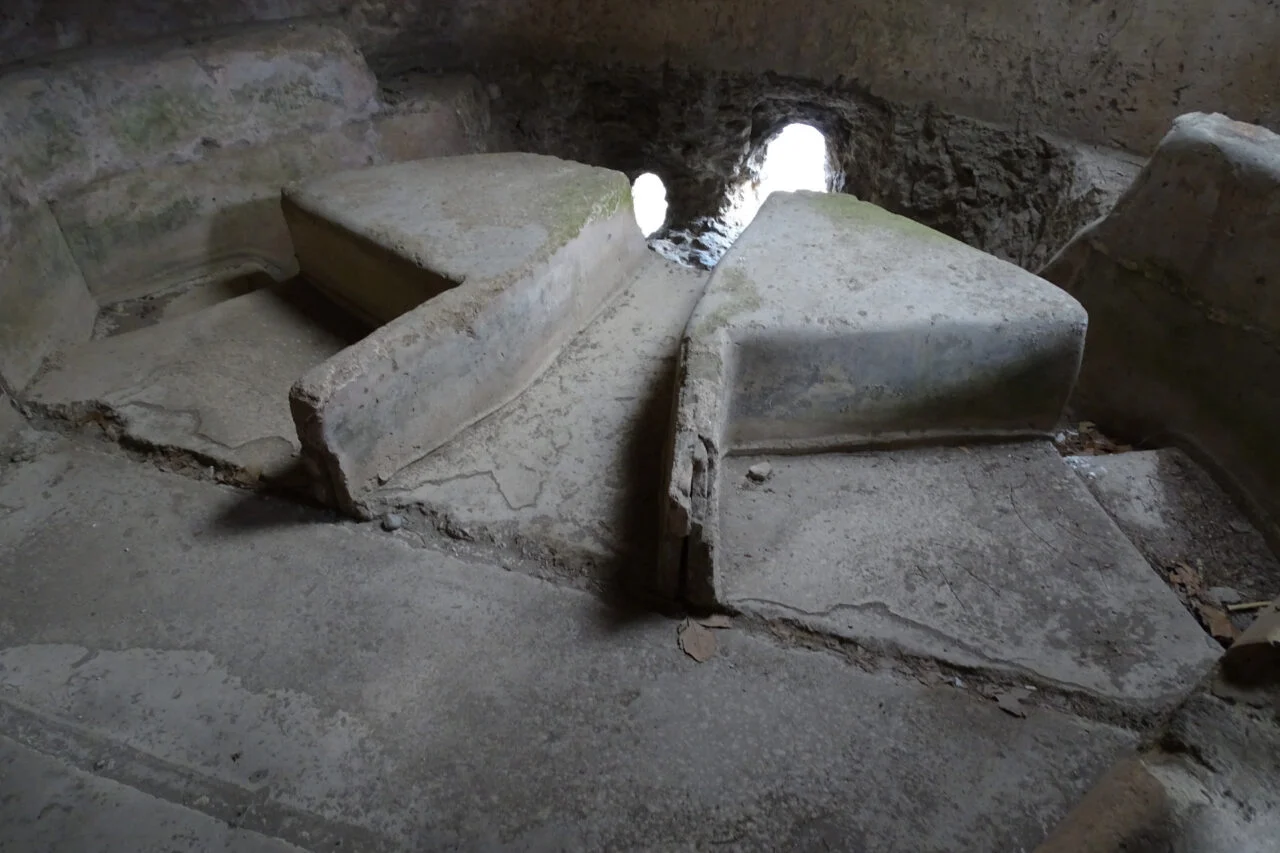
Recent research has unveiled significant insights into the water supply and bathing culture of ancient Pompeii, a city famously preserved by the eruption of Mt. Vesuvius in AD 79. Published in the journal PNAS, the study employs geochemical analysis to explore the ancient city’s hydraulic infrastructure, revealing the origins and quality of its water supply.
Gü l Sürmelihindi from the University of Mainz and a team of researchers conducted an in-depth investigation into the calcium carbonate deposits within Pompeii’s aqueducts, wells, and public baths. These deposits indicate shifts in water quality over time and highlight the technological advancements in water management following Pompeii’s establishment as a Roman colony.
The study points out that prior to the installation of a Roman aqueduct, Pompeii’s inhabitants primarily relied on deep wells to access water. These wells, some reaching depths of up to 40 meters (131 feet), were essential for supplying both the industrial areas and bathing facilities of the city. The researchers noted, “The ancient city of Pompeii… shows technological improvements to its water supply after becoming a Roman colony.”
Water Quality and Cultural Implications
The findings also emphasize the impact of human activity on water quality. For instance, deposits found in the Republican Baths, which were constructed in the 2nd century BCE and abandoned in the following century, reveal the presence of pollutants. This suggests that the Romans did not regularly replenish the baths, raising concerns about hygiene practices in ancient Rome.
With the introduction of a more reliable aqueduct system, the city likely experienced improvements in both the availability of water and overall sanitation. The aqueduct was primarily fed by karst springs, while the wells tapped into mineral-rich groundwater from volcanic deposits. The researchers elaborated, “These geochemical distinctions allow for a detailed reconstruction of Pompeii’s water management system, particularly the transition from well- to aqueduct-based water supply.”
Preserving History and Understanding Daily Life
The study shines a light on an often-overlooked aspect of ancient Roman life: the infrastructure that supported their daily activities. It is not just the stunning frescoes and tragic remains of Pompeii that tell the city’s story; the water systems reveal much about the cultural practices and technological advancements of its time.
Interestingly, the ruins of Pompeii were inhabited for centuries after the catastrophic eruption, indicating a complex history that extends beyond the initial tragedy. This research not only enhances our understanding of Pompeii’s past but also contributes to a broader appreciation of the daily lives of its residents, highlighting the vital role that water management played in ancient Roman society.

Court Ruling Affirms Panama Canal Independence from China

Waldencast PLC Sees 25.7% Drop in Short Interest in January

Selena Gomez Raps Kendrick Lamar’s “Not Like Us” in Viral Clip

Father and Son Reunited in Minnesota After ICE Detention

Top Infrastructure Stocks to Monitor This February

Stars Shine Bright on the Red Carpet at the GRAMMY Awards

URGENT: Flare Injures Goalkeeper Emil Audero in Italian Match

Jane Seymour Celebrates Life at 74, Claims She’s in Her Prime

Mamdani Unveils 50 New Shelter Beds as Cold Weather Claims 14 Lives

University of Hawaiʻi Joins $25.6M AI Project to Monitor Disasters

Foreign Inflows into Japan Stocks Surge to ¥1.34 Trillion

Hudson Williams Gains Popularity as Breakout Star on Heated Rivalry

Boeing’s Merger with McDonnell Douglas: A Strategic Move Explained

$1.25M Grant Advances Hawaiʻi’s Real-Time Hazard Monitoring

Sydney Sweeney Embraces Body Positivity Amid Hollywood Challenges

BOYNEXTDOOR’s Jaehyun Faces Backlash Amid BTS-TWICE Controversy

French Film Explores Group Therapy in ‘Group – The Schopenhauer Project’

Urgent Farewell: Joleen Chaney Leaves Legacy at KFOR
-
Science3 months ago
University of Hawaiʻi Joins $25.6M AI Project to Monitor Disasters
-
Business3 months ago
Foreign Inflows into Japan Stocks Surge to ¥1.34 Trillion
-
 Entertainment2 months ago
Hudson Williams Gains Popularity as Breakout Star on Heated Rivalry
-
 World3 months ago
Boeing’s Merger with McDonnell Douglas: A Strategic Move Explained
-
 Science2 months ago
$1.25M Grant Advances Hawaiʻi’s Real-Time Hazard Monitoring
-
 Entertainment3 months ago
Sydney Sweeney Embraces Body Positivity Amid Hollywood Challenges
-
 Top Stories3 months ago
BOYNEXTDOOR’s Jaehyun Faces Backlash Amid BTS-TWICE Controversy
-
 World3 months ago
French Film Explores Group Therapy in ‘Group – The Schopenhauer Project’
-
 Top Stories3 months ago
Urgent Farewell: Joleen Chaney Leaves Legacy at KFOR
-

 Top Stories3 months ago
Marc Buoniconti’s Legacy: 40 Years Later, Lives Transformed
-

 Lifestyle4 months ago
Kelsea Ballerini Launches ‘Burn the Baggage’ Candle with Ranger Station
-

 Top Stories3 months ago
Carson Wentz Out for Season After Shoulder Surgery: Urgent Update