
Science
New Protein Unlocks Secrets of Brain Communication

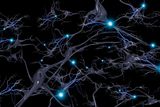
Research into the brain’s complex signaling mechanisms has taken a significant leap forward with the development of a new protein known as iGluSnFR4. Created by a team from the Allen Institute and the Janelia Research Campus at the Howard Hughes Medical Institute, this protein allows neuroscientists to measure not only the signals emitted by brain cells but also the chemical signals they receive. This breakthrough could reshape our understanding of neural communication and the underlying mechanisms of various neurological conditions.
Advancing Understanding of Neuronal Communication
Understanding brain signaling has always posed a challenge for researchers. Neurons communicate through electrical impulses that travel down axons to synapses, where they convert these impulses into chemical messengers called neurotransmitters, with glutamate being the most prevalent. The iGluSnFR4 protein detects the levels of glutamate released, providing insight into the brain’s intricate signaling network.
Prior to this innovation, neuroscientists could only gauge the output of individual neurons. Measuring the faint and rapid chemical inputs from thousands of other neurons remained elusive. As Kaspar Podgorski, a co-author of the study, noted, “Neuroscientists have pretty good ways of measuring structural connections between neurons, but we haven’t been good at combining these two kinds of information.” The introduction of the iGluSnFR4 protein allows for a more comprehensive view of the electrical conversation occurring within the brain.
Podgorski likened the previous inability to measure these signals to reading a book with scrambled words. The new protein adds clarity by revealing the connections and context of neural communication.
Potential Implications for Neurological Research
The recent publication in Nature Methods introduces two variants of the iGluSnFR4 protein: iGluSnFR4f, designed for rapid signal measurement, and iGluSnFR4s, which captures signals from larger groups of neurons. Through a series of experiments on mouse brains, the team demonstrated that these proteins could produce a fluorescent signal, visualizable via microscopy, indicating real-time brain activity.
The implications of this research extend beyond theoretical understanding. The ability to measure incoming signals into neurons is crucial for investigating neurological disorders. Disruptions in glutamate signaling are linked to conditions such as schizophrenia and epilepsy. As Podgorski emphasized, “What we have invented here is a way of measuring information that comes into neurons from different sources, and that’s been a critical part missing from neuroscience research.”
This breakthrough could pave the way for new therapeutic approaches and enhance our understanding of how the brain processes information, potentially leading to improved interventions for various cognitive disorders.
As research continues, the iGluSnFR4 protein promises to be a valuable tool in neuroscience, bringing researchers closer to deciphering the brain’s hidden language and its intricate communication pathways.

Beaufort Man Arrested in Hit-and-Run; Two Pedestrians Injured

KORU Medical Systems Sees 21.4% Drop in Short Interest in January

NASA’s WB-57: High-Altitude Research Aircraft Takes Flight

Chunghwa Telecom Sees 21.6% Drop in Short Interest for January

Claim Your $250 Bet Match NOW for Lakers vs. Knicks Showdown!

Court Ruling Affirms Panama Canal Independence from China

Waldencast PLC Sees 25.7% Drop in Short Interest in January

Selena Gomez Raps Kendrick Lamar’s “Not Like Us” in Viral Clip

Father and Son Reunited in Minnesota After ICE Detention

University of Hawaiʻi Joins $25.6M AI Project to Monitor Disasters

Foreign Inflows into Japan Stocks Surge to ¥1.34 Trillion

Hudson Williams Gains Popularity as Breakout Star on Heated Rivalry

Boeing’s Merger with McDonnell Douglas: A Strategic Move Explained

$1.25M Grant Advances Hawaiʻi’s Real-Time Hazard Monitoring

Sydney Sweeney Embraces Body Positivity Amid Hollywood Challenges

BOYNEXTDOOR’s Jaehyun Faces Backlash Amid BTS-TWICE Controversy

Urgent Farewell: Joleen Chaney Leaves Legacy at KFOR

French Film Explores Group Therapy in ‘Group – The Schopenhauer Project’
-
Science3 months ago
University of Hawaiʻi Joins $25.6M AI Project to Monitor Disasters
-
Business3 months ago
Foreign Inflows into Japan Stocks Surge to ¥1.34 Trillion
-
 Entertainment2 months ago
Hudson Williams Gains Popularity as Breakout Star on Heated Rivalry
-
 World3 months ago
Boeing’s Merger with McDonnell Douglas: A Strategic Move Explained
-
 Science2 months ago
$1.25M Grant Advances Hawaiʻi’s Real-Time Hazard Monitoring
-
 Entertainment3 months ago
Sydney Sweeney Embraces Body Positivity Amid Hollywood Challenges
-
 Top Stories3 months ago
BOYNEXTDOOR’s Jaehyun Faces Backlash Amid BTS-TWICE Controversy
-
 Top Stories3 months ago
Urgent Farewell: Joleen Chaney Leaves Legacy at KFOR
-
 World3 months ago
French Film Explores Group Therapy in ‘Group – The Schopenhauer Project’
-

 Top Stories3 months ago
Marc Buoniconti’s Legacy: 40 Years Later, Lives Transformed
-

 Lifestyle4 months ago
Kelsea Ballerini Launches ‘Burn the Baggage’ Candle with Ranger Station
-

 Top Stories3 months ago
Carson Wentz Out for Season After Shoulder Surgery: Urgent Update