
Science
Jellyfish and Sea Anemones Exhibit Sleep Patterns Similar to Humans

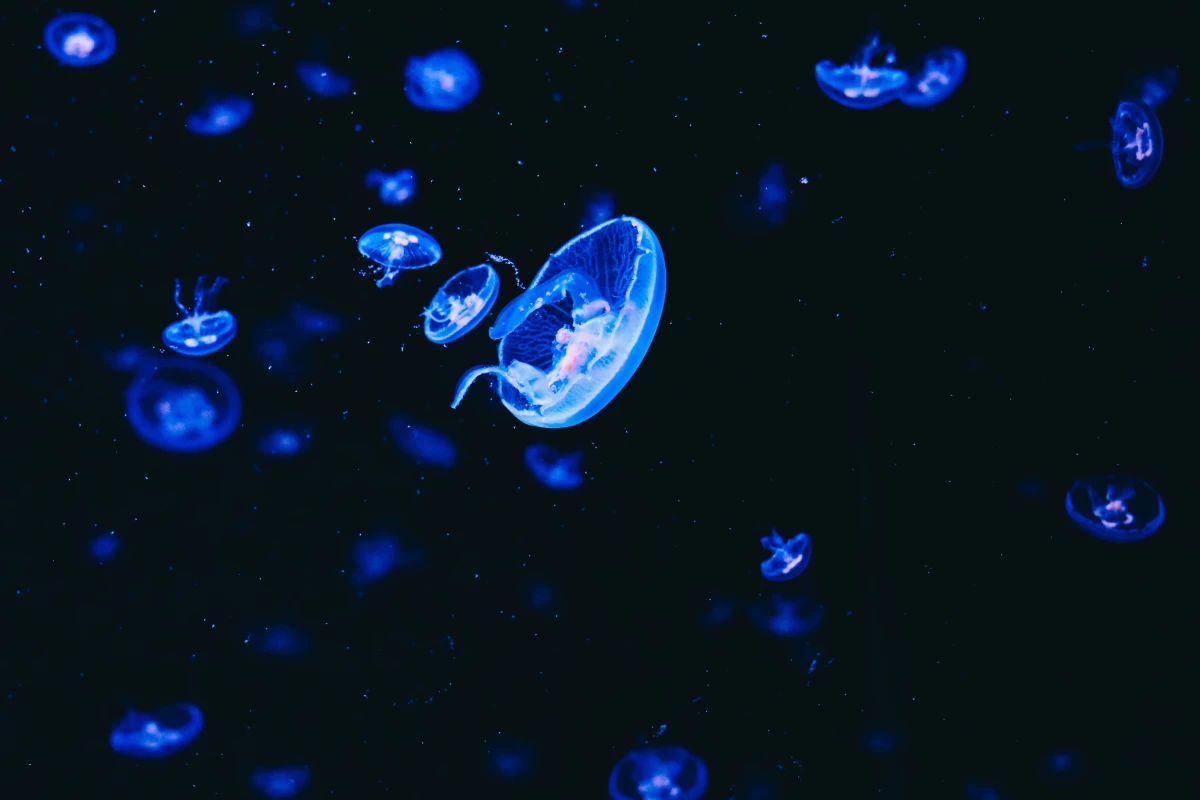
New research indicates that jellyfish and sea anemones exhibit sleep patterns remarkably similar to those of humans. A study published in Nature Communications reveals these ancient animals spend approximately one-third of their day sleeping, challenging previous assumptions about sleep in creatures lacking a brain. The findings underscore the evolutionary significance of sleep, suggesting it may have developed long before the brain to support cellular maintenance and recovery.
According to Lior Appelbaum, a neurobiologist at Bar-Ilan University, “Sleep is important even for animals without a brain. It helps them recover from cellular stress and carry out cellular maintenance.” This insight sheds light on the longstanding mystery surrounding the purpose of sleep across various species.
To investigate the sleeping behavior of these organisms, Appelbaum and his team focused on the upside-down jellyfish (Cassiopea andromeda) and the starlet sea anemone (Nematostella vectensis). Using infrared cameras and movement-tracking software, researchers observed the activity patterns of these cnidarians under controlled conditions simulating a natural 24-hour cycle, consisting of 12 hours of light and 12 hours of darkness.
The study found that jellyfish are predominantly active during the day, sleeping mainly at night and occasionally taking midday naps, similar to human habits. In contrast, sea anemones displayed increased activity at night, with sleep occurring primarily in the early morning hours.
To confirm that the observed inactivity was indeed sleep, the researchers assessed the animals’ responses to stimuli, such as light or food, during these periods. Appelbaum defined a sleep-like state for jellyfish as pulsing fewer than 37 times per minute for more than three minutes, while for sea anemones, it involved eight minutes or more of stillness.
The results were surprising: both species demonstrated sleep durations of approximately eight hours, mirroring the one-third of life that humans typically spend sleeping. This similarity raises intriguing questions about the evolutionary origins of sleep.
Building on previous research that indicated a link between DNA damage in nerve cells and sleep in zebrafish, Appelbaum’s team further explored what drives sleep in jellyfish and sea anemones. They subjected the animals to ultraviolet (UV) radiation and specific chemicals known to induce DNA damage, alongside sleep disruptions such as gentle water pulses.
The findings revealed that DNA damage increased during wakefulness and was repaired during sleep. “Jellyfish and sea anemones responded to this DNA damage by sleeping more,” Appelbaum noted, indicating that sleep is integral to cellular repair processes.
The study highlights a fundamental aspect of biological function: “Sleep evolved way before the brain – it’s essential for cells, cellular maintenance, and neurons,” Appelbaum concluded. This research not only expands our understanding of sleep across the animal kingdom but also emphasizes its critical role in maintaining cellular health, even in organisms with simple nervous systems.

Gigachad Price Falls to $0.0025 Amid Market Fluctuations

Exploring Bortus: The Complex Alien of ‘The Orville’

Harry Potter Quiz Links Personality Traits to Entrepreneurship

Colorado Voters React to Trump’s Immigration Actions Amid Midterms

Donaldson Capital Management Boosts Stake in UnitedHealth Group

Researchers Establish First Lab Colony of Invasive Beetle in Australia

Jersey City Schools Confirm Controversial Kindergarten Move

NeuroOne Medical Technologies Outperforms Cannlabs in Financial Metrics

Nevada Bankers Prepare for 2026 Challenges Amid Changing Landscape

University of Hawaiʻi Joins $25.6M AI Project to Monitor Disasters

Foreign Inflows into Japan Stocks Surge to ¥1.34 Trillion

Hudson Williams Gains Popularity as Breakout Star on Heated Rivalry

Boeing’s Merger with McDonnell Douglas: A Strategic Move Explained

$1.25M Grant Advances Hawaiʻi’s Real-Time Hazard Monitoring

Sydney Sweeney Embraces Body Positivity Amid Hollywood Challenges

BOYNEXTDOOR’s Jaehyun Faces Backlash Amid BTS-TWICE Controversy

French Film Explores Group Therapy in ‘Group – The Schopenhauer Project’

Urgent Farewell: Joleen Chaney Leaves Legacy at KFOR
-
Science3 months ago
University of Hawaiʻi Joins $25.6M AI Project to Monitor Disasters
-
Business3 months ago
Foreign Inflows into Japan Stocks Surge to ¥1.34 Trillion
-
 Entertainment2 months ago
Hudson Williams Gains Popularity as Breakout Star on Heated Rivalry
-
 World3 months ago
Boeing’s Merger with McDonnell Douglas: A Strategic Move Explained
-
 Science2 months ago
$1.25M Grant Advances Hawaiʻi’s Real-Time Hazard Monitoring
-
 Entertainment3 months ago
Sydney Sweeney Embraces Body Positivity Amid Hollywood Challenges
-
 Top Stories3 months ago
BOYNEXTDOOR’s Jaehyun Faces Backlash Amid BTS-TWICE Controversy
-
 World3 months ago
French Film Explores Group Therapy in ‘Group – The Schopenhauer Project’
-
 Top Stories3 months ago
Urgent Farewell: Joleen Chaney Leaves Legacy at KFOR
-

 Top Stories3 months ago
Marc Buoniconti’s Legacy: 40 Years Later, Lives Transformed
-

 Lifestyle4 months ago
Kelsea Ballerini Launches ‘Burn the Baggage’ Candle with Ranger Station
-

 Top Stories3 months ago
Carson Wentz Out for Season After Shoulder Surgery: Urgent Update