
Science
Indigenous-Led Hunting Tackles Deer Overabundance in B.C.

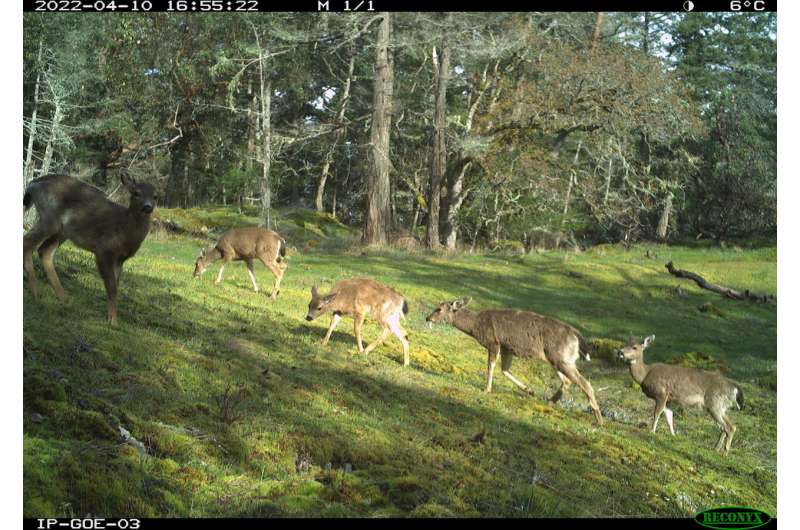
Research from the University of British Columbia (UBC) has identified Indigenous-led hunting as the most effective strategy for managing the overpopulation of black-tailed deer on the Southern Gulf Islands in British Columbia. The study, conducted in collaboration with Coast Salish Nations and regional research partners, highlights both ecological and cultural considerations in addressing this pressing issue.
The study, published in the journal People and Nature, reveals that black-tailed deer populations have surged to nearly ten times their historical levels over the past century. This increase is attributed to factors such as human alterations to landscapes, restrictions on hunting, and the elimination of natural predators. The unchecked deer population has resulted in severe ecological consequences, including the degradation of vital ecosystems and the disruption of cultural connections to the land.
Dr. Tara Martin, a leading researcher from UBC’s Faculty of Forestry, emphasized the severity of the situation, stating, “For most people, these islands look beautiful and natural, but they are entirely degraded. The change has been so slow, most people don’t recognize this shift.” The consequences are evident, with ecosystems like the Garry Oak meadow facing the threat of irreversible collapse due to overgrazing.
Strategies for Sustainable Management
The study advocates for an inclusive approach to deer management that balances ecological needs with human well-being. Lead author and doctoral student Sofie McComb noted that developing effective strategies is complex, as various values and goals often compete, leading to indecision. The research team evaluated several management options, including Indigenous-led hunting, improving predator viability, employing deer reduction specialists, using contraceptives, and increasing licensed hunting.
Indigenous-led hunting emerged as the most promising solution, with a likelihood of enhancing both human and ecological well-being by nearly 60%. In contrast, while increased licensed hunting was identified as a cost-effective strategy, its long-term benefits were projected to be significantly lower, achieving less than 30% likelihood of meaningful impact.
The study underscores the importance of integrating Indigenous knowledge systems alongside Western scientific approaches. “This work shows that restoring cultural sovereignty and ecosystem health can go hand in hand,” Dr. Martin stated, advocating for a comprehensive framework that respects diverse knowledge and fosters cooperation among stakeholders.
The Cost of Inaction
Experts warn that maintaining the current status quo could exacerbate ecological degradation. Delaying action is viewed as the most detrimental choice. “If we don’t do something soon, the ecosystems will not be recoverable,” McComb cautioned. She highlighted that the deer themselves are also suffering, resorting to eating less nutritious food due to the lack of vegetation.
The findings of the study provide a blueprint for communities facing similar challenges with hyperabundant herbivores worldwide. By weighing feasibility and costs alongside ecological and cultural benefits, decision-makers can develop effective, socially grounded solutions.
In conclusion, the research emphasizes the need for immediate action to restore balance in these ecosystems. The collaborative effort between Indigenous communities and researchers showcases a path forward that respects both environmental and cultural imperatives.

Shark Teeth Reveal Urgent Insights to Prevent Extinction

Englewood Church Members Reunite After Thanksgiving Fire

Mayor Names Alan Wong as District 4 Supervisor Amid Controversy

Study Reveals Nitrous Oxide’s Potential in Treating Depression

Walmart Launches Massive Cyber Monday Sales Starting at $5

Rep. Don Bacon Criticizes White House for Lack of Clarity on Ukraine

UK Report Reveals Rise of AI in University Research Evaluation

Florida Hires Jon Sumrall as Head Coach: Implications for FSU Football

Trump Promises to Release MRI Results from October Scan

University of Hawaiʻi Joins $25.6M AI Project to Monitor Disasters

Foreign Inflows into Japan Stocks Surge to ¥1.34 Trillion

BOYNEXTDOOR’s Jaehyun Faces Backlash Amid BTS-TWICE Controversy

Carson Wentz Out for Season After Shoulder Surgery: Urgent Update

Marc Buoniconti’s Legacy: 40 Years Later, Lives Transformed

Innovative Surgery Restores Confidence for Breast Cancer Patients

Steve Kerr Supports Jonathan Kuminga After Ejection in Preseason Game

Kelsea Ballerini Launches ‘Burn the Baggage’ Candle with Ranger Station

Chicago’s Viral ‘Rat Hole’ Likely Created by Squirrel, Study Reveals
-
Science4 weeks ago
University of Hawaiʻi Joins $25.6M AI Project to Monitor Disasters
-
Business1 month ago
Foreign Inflows into Japan Stocks Surge to ¥1.34 Trillion
-
 Top Stories1 month ago
BOYNEXTDOOR’s Jaehyun Faces Backlash Amid BTS-TWICE Controversy
-
 Top Stories1 month ago
Carson Wentz Out for Season After Shoulder Surgery: Urgent Update
-
 Top Stories1 month ago
Marc Buoniconti’s Legacy: 40 Years Later, Lives Transformed
-
 Health1 month ago
Innovative Surgery Restores Confidence for Breast Cancer Patients
-
 Sports2 months ago
Steve Kerr Supports Jonathan Kuminga After Ejection in Preseason Game
-
 Lifestyle2 months ago
Kelsea Ballerini Launches ‘Burn the Baggage’ Candle with Ranger Station
-
 Science2 months ago
Chicago’s Viral ‘Rat Hole’ Likely Created by Squirrel, Study Reveals
-

 Entertainment2 months ago
Zoe Saldana Advocates for James Cameron’s Avatar Documentary
-

 Lifestyle2 months ago
Dua Lipa Celebrates Passing GCSE Spanish During World Tour
-

 Business2 months ago
Tyler Technologies Set to Reveal Q3 2025 Earnings on October 22