
Science
Federal Review of Science Grants Sparks Cautious Optimism

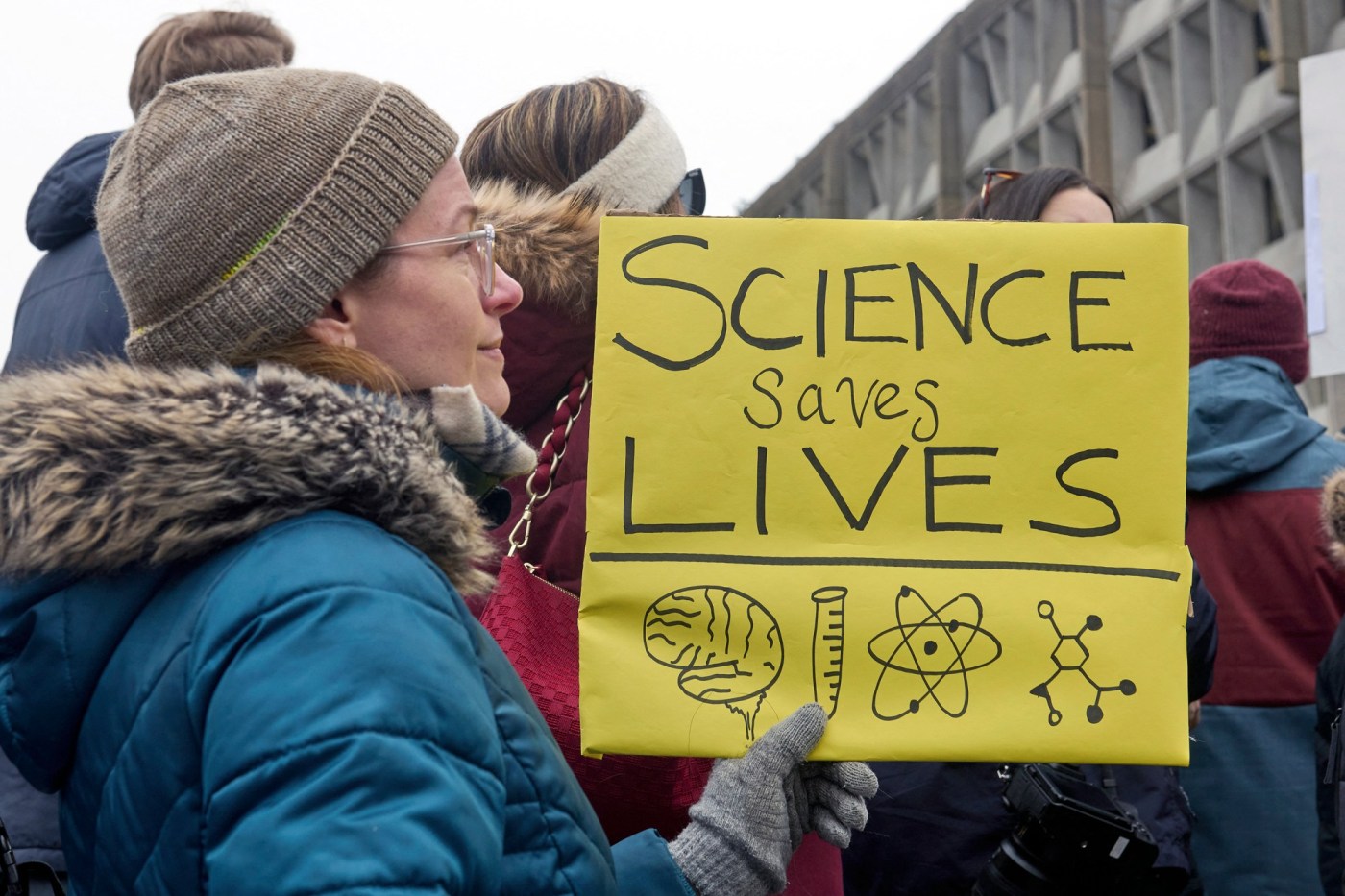
The Trump administration has agreed to reevaluate thousands of science and medical research grant applications that had been previously stalled due to concerns about diversity, equity, and inclusion. This decision has prompted cautious optimism, particularly among researchers and universities like the University of Washington (UW), which have been significantly impacted by the freeze on funding. In 2024, UW received $572 million from the National Institutes of Health (NIH), and the potential resumption of these applications could lead to advancements in critical areas such as HIV prevention and Alzheimer’s disease.
Washington’s Attorney General, Nick Brown, joined 16 other state attorneys general in a lawsuit against the government, highlighting the negative consequences of the funding freeze. The NIH, part of the Department of Health and Human Services, recently reviewed hundreds of applications, approving 499 shortly after the agreement was reached last month, signaling a possible thaw in the backlog of stalled applications.
Despite this positive movement, skepticism remains rooted in past actions taken by the Trump administration. During his first term, President Trump attempted to cut $6.1 billion from NIH funding, which included a significant $1 billion reduction for cancer research. Bipartisan efforts in Congress ultimately prevented these cuts.
In early 2025, Trump implemented a pause on federal grant applications and sought to reshape funding priorities in higher education. His administration’s actions included cutting research grant funding, particularly for cancer treatments, which incited a series of lawsuits from affected institutions. Notable universities like Cornell University, Columbia University, Brown University, and his alma mater, the University of Pennsylvania, faced substantial funding threats as the administration pushed institutions to align with its views on various social issues.
The agreement reached with state attorneys general requires the NIH to consider the stalled applications but does not mandate funding for them. This cautious step forward comes after nearly a year of litigation and advocacy, raising questions about the future of federal support for scientific research in a country that has long prided itself on its contributions to medical and technological advancements.
As the review process unfolds, stakeholders remain hopeful yet vigilant, aware that the path to restoring funding and fostering innovation is fraught with challenges. The resolution of this issue is crucial not only for advancing scientific research but also for maintaining the integrity of federal support for diverse and inclusive research initiatives.

Golden Link Chapter No. 204 Honors Kijahfha Mahoney with Service Award

Gigachad Price Falls to $0.0025 Amid Market Fluctuations

Exploring Bortus: The Complex Alien of ‘The Orville’

Harry Potter Quiz Links Personality Traits to Entrepreneurship

Colorado Voters React to Trump’s Immigration Actions Amid Midterms

Donaldson Capital Management Boosts Stake in UnitedHealth Group

Researchers Establish First Lab Colony of Invasive Beetle in Australia

Jersey City Schools Confirm Controversial Kindergarten Move

NeuroOne Medical Technologies Outperforms Cannlabs in Financial Metrics

University of Hawaiʻi Joins $25.6M AI Project to Monitor Disasters

Foreign Inflows into Japan Stocks Surge to ¥1.34 Trillion

Hudson Williams Gains Popularity as Breakout Star on Heated Rivalry

Boeing’s Merger with McDonnell Douglas: A Strategic Move Explained

$1.25M Grant Advances Hawaiʻi’s Real-Time Hazard Monitoring

Sydney Sweeney Embraces Body Positivity Amid Hollywood Challenges

BOYNEXTDOOR’s Jaehyun Faces Backlash Amid BTS-TWICE Controversy

French Film Explores Group Therapy in ‘Group – The Schopenhauer Project’

Urgent Farewell: Joleen Chaney Leaves Legacy at KFOR
-
Science3 months ago
University of Hawaiʻi Joins $25.6M AI Project to Monitor Disasters
-
Business3 months ago
Foreign Inflows into Japan Stocks Surge to ¥1.34 Trillion
-
 Entertainment2 months ago
Hudson Williams Gains Popularity as Breakout Star on Heated Rivalry
-
 World3 months ago
Boeing’s Merger with McDonnell Douglas: A Strategic Move Explained
-
 Science2 months ago
$1.25M Grant Advances Hawaiʻi’s Real-Time Hazard Monitoring
-
 Entertainment3 months ago
Sydney Sweeney Embraces Body Positivity Amid Hollywood Challenges
-
 Top Stories3 months ago
BOYNEXTDOOR’s Jaehyun Faces Backlash Amid BTS-TWICE Controversy
-
 World3 months ago
French Film Explores Group Therapy in ‘Group – The Schopenhauer Project’
-
 Top Stories3 months ago
Urgent Farewell: Joleen Chaney Leaves Legacy at KFOR
-

 Top Stories3 months ago
Marc Buoniconti’s Legacy: 40 Years Later, Lives Transformed
-

 Lifestyle4 months ago
Kelsea Ballerini Launches ‘Burn the Baggage’ Candle with Ranger Station
-

 Top Stories3 months ago
Carson Wentz Out for Season After Shoulder Surgery: Urgent Update