
Politics
Mike Johnson Leads Surge in House Discharge Petitions

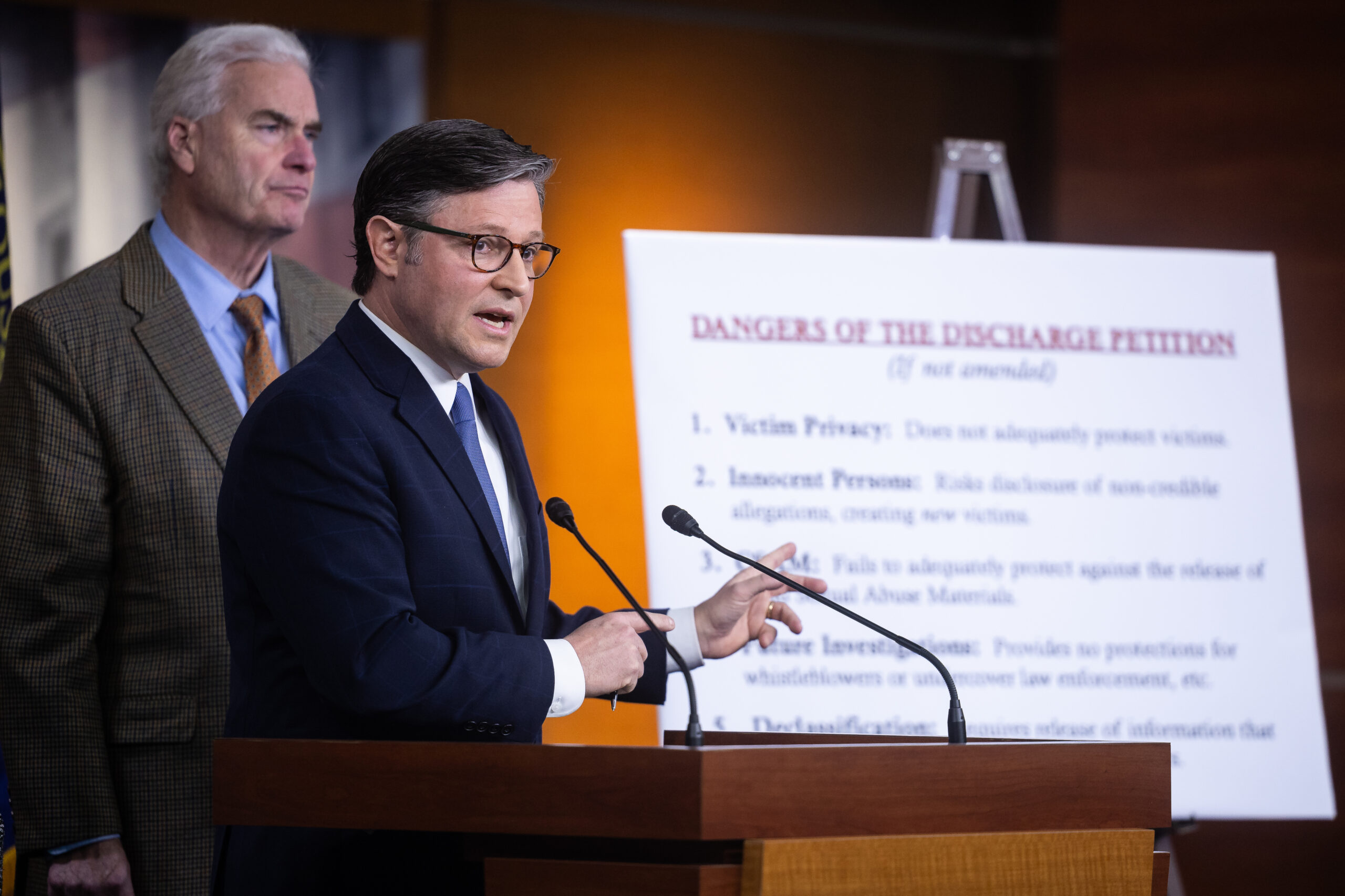
The House of Representatives has experienced a notable increase in the use of discharge petitions under the leadership of Speaker Mike Johnson. Since he took office, five discharge petitions have been completed, a significant rise compared to the total of four in the previous three decades. This shift indicates a strategic maneuver by the Republican Party to push legislation through the House, bypassing traditional committee processes.
Discharge petitions serve as a parliamentary tool that allows members of Congress to bring a bill to the floor for a vote, even if it has not received a committee hearing. This method has rarely been employed in the past, making the current situation particularly striking. Under Johnson’s stewardship, the petitions have gained traction, reflecting a more aggressive legislative approach aimed at advancing the Republican agenda.
In November 2023, the House successfully passed a key piece of legislation via a discharge petition. This bill, which addresses immigration reform, garnered significant bipartisan support, illustrating that even contentious issues can find common ground when traditional pathways are blocked. The vote not only marked a legislative victory but also showcased the potential for collaboration across party lines.
The surge in discharge petitions is a clear response to the growing frustrations among rank-and-file members of the House. Many lawmakers feel constrained by the committee system, where bills can languish for extended periods without action. By utilizing discharge petitions, members from both the Republican and Democratic parties are seeking to expedite the legislative process and ensure that pressing issues are addressed more swiftly.
Critics of this approach argue that frequent use of discharge petitions may undermine the committee system, which is intended to provide thorough examination and debate on proposed legislation. They contend that bypassing committees could lead to poorly crafted laws that have not undergone adequate scrutiny. Nevertheless, proponents maintain that the current political climate necessitates such measures to break through legislative gridlock.
As Mike Johnson continues to navigate the complex landscape of the House, the increased reliance on discharge petitions may redefine how legislation is passed in the coming years. The implications of this shift could resonate beyond individual bills, potentially altering the balance of power within the House and affecting the dynamics between the two major political parties.
Looking ahead, the trend towards more frequent use of discharge petitions raises questions about the future of legislative strategy in the House. Will this approach lead to more effective governance, or will it create further division among lawmakers? Only time will tell as Johnson and his colleagues continue to push for their priorities in a divided Congress.

Knicks Dominate Raptors 116-94, Extend Home Win Streak to 10

Hallmark Premieres ‘Christmas at the Catnip Café’ Tonight!

Millville Woman Arrested After Threatening U-Haul Worker with Baton

Japan’s PM Takaichi Vows to Prioritize Fiscal Management NOW

Long Island Faces Disruptive Winter Weather Tuesday Morning

Urgent: 18-Year-Old Killed in Triple Shooting in Bronzeville

Shark Teeth Reveal Urgent Insights to Prevent Extinction

Englewood Church Members Reunite After Thanksgiving Fire

Mayor Names Alan Wong as District 4 Supervisor Amid Controversy

University of Hawaiʻi Joins $25.6M AI Project to Monitor Disasters

Foreign Inflows into Japan Stocks Surge to ¥1.34 Trillion

BOYNEXTDOOR’s Jaehyun Faces Backlash Amid BTS-TWICE Controversy

Carson Wentz Out for Season After Shoulder Surgery: Urgent Update

Marc Buoniconti’s Legacy: 40 Years Later, Lives Transformed

Innovative Surgery Restores Confidence for Breast Cancer Patients

Kelsea Ballerini Launches ‘Burn the Baggage’ Candle with Ranger Station

Steve Kerr Supports Jonathan Kuminga After Ejection in Preseason Game

Chicago’s Viral ‘Rat Hole’ Likely Created by Squirrel, Study Reveals
-
Science4 weeks ago
University of Hawaiʻi Joins $25.6M AI Project to Monitor Disasters
-
Business1 month ago
Foreign Inflows into Japan Stocks Surge to ¥1.34 Trillion
-
 Top Stories1 month ago
BOYNEXTDOOR’s Jaehyun Faces Backlash Amid BTS-TWICE Controversy
-
 Top Stories1 month ago
Carson Wentz Out for Season After Shoulder Surgery: Urgent Update
-
 Top Stories1 month ago
Marc Buoniconti’s Legacy: 40 Years Later, Lives Transformed
-
 Health1 month ago
Innovative Surgery Restores Confidence for Breast Cancer Patients
-
 Lifestyle2 months ago
Kelsea Ballerini Launches ‘Burn the Baggage’ Candle with Ranger Station
-
 Sports2 months ago
Steve Kerr Supports Jonathan Kuminga After Ejection in Preseason Game
-
 Science2 months ago
Chicago’s Viral ‘Rat Hole’ Likely Created by Squirrel, Study Reveals
-

 Lifestyle2 months ago
Dua Lipa Celebrates Passing GCSE Spanish During World Tour
-

 Entertainment2 months ago
Zoe Saldana Advocates for James Cameron’s Avatar Documentary
-

 Politics2 months ago
Dallin H. Oaks Assumes Leadership of Latter-day Saints Church