
Health
RFK Jr. Challenges Childhood Vaccine Schedule in U.S. Health Policy

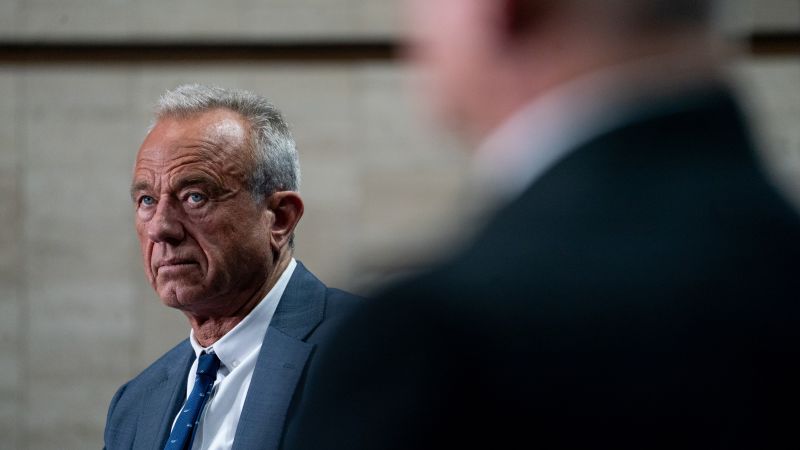
The childhood immunization schedule in the United States, a framework guiding vaccinations from birth through adolescence, is under renewed scrutiny. On December 16, 2025, the Centers for Disease Control and Prevention (CDC) made a significant change by removing the long-standing recommendation for newborns to receive the hepatitis B vaccine. This decision, influenced by Health and Human Services Secretary Robert F. Kennedy Jr., has raised concerns among health professionals due to the absence of new safety data questioning the vaccine’s established track record.
This immunization schedule has been in place since 1995, representing decades of scientific research and clinical trials involving millions of participants. Vaccines on this schedule have proven effective in drastically reducing the incidence of diseases that were once common, rendering many of them virtually unseen by today’s parents. The CDC’s recent alteration has sparked a broader debate on vaccine safety and the future of immunization practices in the U.S.
Historical Context of Vaccination in the U.S.
Historically, the U.S. did not follow a unified vaccination schedule until mid-20th century developments highlighted the need for federal oversight. Following the 1955 incident involving Cutter Laboratories, which produced faulty polio vaccines, the federal government established the Advisory Committee on Immunization Practices (ACIP) to provide consistent guidance. The ACIP’s formation marked a turning point, allowing for a systematic evaluation of vaccines and their recommendations.
Throughout the 1960s and 1970s, additional vaccines targeting diseases such as measles, mumps, and rubella were introduced. The rubella vaccine, in particular, played a critical role in preventing congenital rubella syndrome, which posed severe risks to unborn children. By 2015, the Americas had successfully eliminated rubella, showcasing the efficacy of vaccines in controlling infectious diseases.
Advancements in vaccine technology further improved the immunization landscape. The introduction of conjugate vaccines in the 1980s allowed for effective responses in infants, leading to significant declines in diseases like Haemophilus influenzae Type b (Hib). The Hib vaccine, licensed in 1990, resulted in a remarkable 99% drop in cases within five years.
The Current Debate Surrounding Vaccine Recommendations
In 1991, the CDC added the hepatitis B vaccine to the schedule, a move aimed at protecting infants from a virus that could lead to chronic infections and severe health complications. Infants are particularly vulnerable, with a 90% chance of developing chronic hepatitis B if infected at birth. This vaccine served as a critical safety net, contributing to a 99% reduction in hepatitis B infections among American children.
The recent decision by the CDC to drop the hepatitis B recommendation has drawn criticism from various health organizations, including the American Academy of Pediatrics and the American College of Obstetricians and Gynecologists. These groups have expressed concerns that the removal of this vaccine from the standard schedule could lead to increased risks of hepatitis B infections among vulnerable populations.
Kennedy’s leadership has brought about significant changes within the CDC, including the dismissal of all 17 ACIP members, many of whom held established views on vaccine safety. This shift has raised alarms regarding the future direction of vaccine policy in the U.S., particularly as Kennedy and his newly appointed panel seek to realign the American vaccine schedule with countries like Denmark, which recommends fewer vaccines.
While the Danish system may work effectively within its context of universal healthcare and equitable access, the U.S. healthcare framework is characterized by fragmentation and varying access to services. The ongoing discussions about vaccine policy underscore a need for careful consideration of the implications for public health, especially in a country where millions remain uninsured or underinsured.
As the landscape of immunization evolves, the balance between individual choice and community health remains a critical discourse. The decisions made regarding childhood vaccinations will have lasting effects on public health outcomes, and ongoing dialogue among health professionals, policymakers, and the public will be essential in shaping future immunization strategies.

Paramount Unveils Y: Marshals Photos; Kayce Dutton’s New Role

Big Ten vs. Big 12: College Basketball Power Rankings Shift

MLB’s New Ball/Strike Challenge System: Major Changes Ahead!

RFK Jr. Challenges Childhood Vaccine Schedule in U.S. Health Policy

New Moon in Sagittarius on December 19 Sparks Reflection and Growth

Trump Enacts Law Revoking Sanctions Against Syria’s Assad Regime

Trump Signs Law Ending Syria Sanctions, Shocking Global Response

Ancient DNA Reveals True Origins of Beachy Head Woman

Pirates Seek Offensive Boost with Free Agent Targets O’Hearn and Suárez

University of Hawaiʻi Joins $25.6M AI Project to Monitor Disasters

Foreign Inflows into Japan Stocks Surge to ¥1.34 Trillion

BOYNEXTDOOR’s Jaehyun Faces Backlash Amid BTS-TWICE Controversy

Boeing’s Merger with McDonnell Douglas: A Strategic Move Explained

Carson Wentz Out for Season After Shoulder Surgery: Urgent Update

Marc Buoniconti’s Legacy: 40 Years Later, Lives Transformed

Sydney Sweeney Embraces Body Positivity Amid Hollywood Challenges

Kelsea Ballerini Launches ‘Burn the Baggage’ Candle with Ranger Station

Innovative Surgery Restores Confidence for Breast Cancer Patients
-
Science2 months ago
University of Hawaiʻi Joins $25.6M AI Project to Monitor Disasters
-
Business2 months ago
Foreign Inflows into Japan Stocks Surge to ¥1.34 Trillion
-
 Top Stories2 months ago
BOYNEXTDOOR’s Jaehyun Faces Backlash Amid BTS-TWICE Controversy
-
 World2 months ago
Boeing’s Merger with McDonnell Douglas: A Strategic Move Explained
-
 Top Stories2 months ago
Carson Wentz Out for Season After Shoulder Surgery: Urgent Update
-
 Top Stories2 months ago
Marc Buoniconti’s Legacy: 40 Years Later, Lives Transformed
-
 Entertainment2 months ago
Sydney Sweeney Embraces Body Positivity Amid Hollywood Challenges
-
 Lifestyle2 months ago
Kelsea Ballerini Launches ‘Burn the Baggage’ Candle with Ranger Station
-
 Health2 months ago
Innovative Surgery Restores Confidence for Breast Cancer Patients
-

 Sports2 months ago
Steve Kerr Supports Jonathan Kuminga After Ejection in Preseason Game
-

 Entertainment2 months ago
Zoe Saldana Advocates for James Cameron’s Avatar Documentary
-

 Science2 months ago
Chicago’s Viral ‘Rat Hole’ Likely Created by Squirrel, Study Reveals