
Health
MAHA Summit Explores Psychedelics and Health Innovations

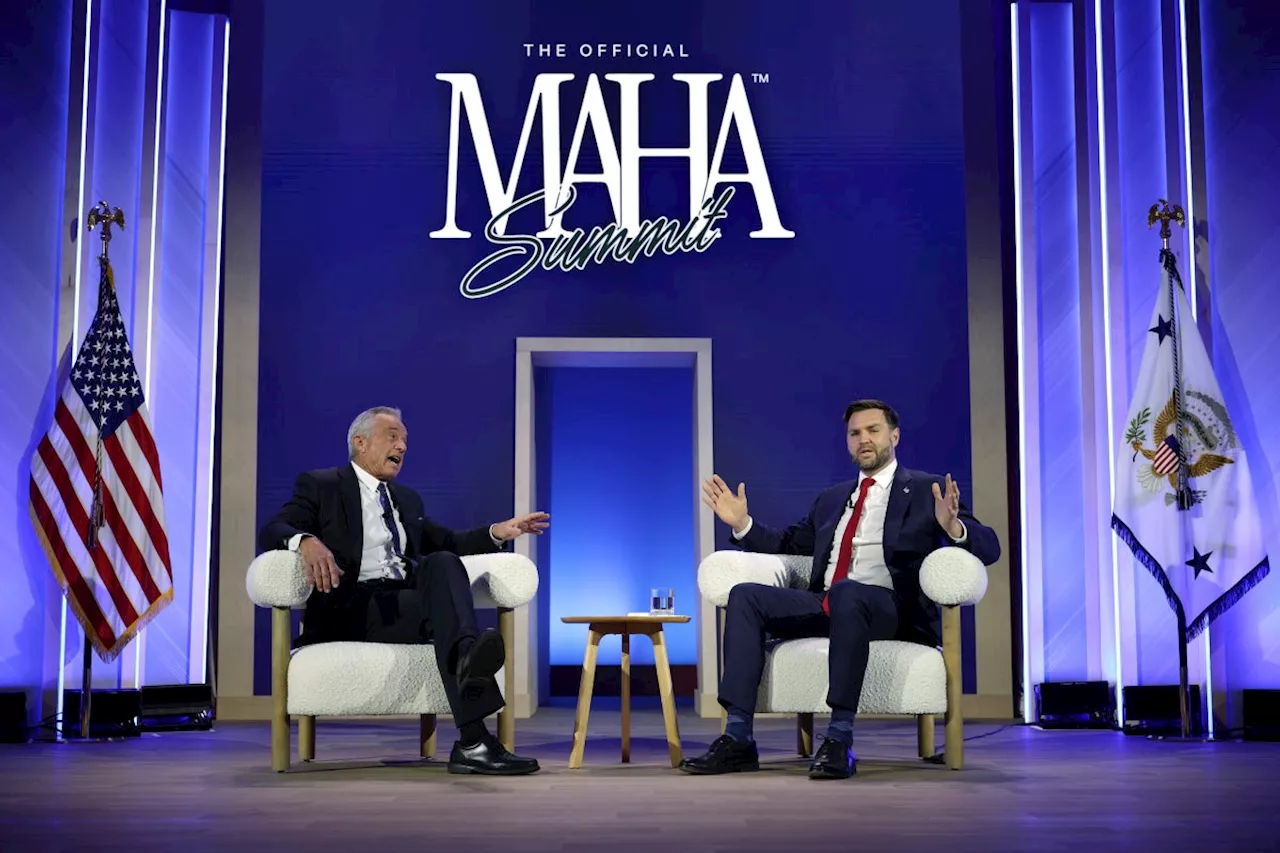
The Make America Healthy Again (MAHA) summit, held on November 12, 2025, at the Waldorf Astoria Hotel in Washington, D.C., brought together key figures from health, politics, and business to discuss innovative approaches to health policy. Attendees included Robert F. Kennedy, Jr., the U.S. Secretary of Health and Human Services, and J.D. Vance, a U.S. Senator, as well as corporate representatives from companies like Walmart and Google.
The summit aimed to create a dialogue about the future of health in the United States, focusing on alternative therapies and lifestyle improvements. Notably absent were academic researchers and clinicians, leading to a notable absence of traditional scientific perspectives. Instead, the event featured speakers who criticized established medical institutions, attributing their shortcomings to alleged corruption within the food and pharmaceutical industries.
Attendees engaged in discussions about various health topics, with sessions emphasizing lifestyle choices, such as enhanced sleep and the use of dietary supplements. Vance described the MAHA movement as essential to achieving political success in Washington, highlighting its rapid evolution from a grassroots network to a significant political presence.
Throughout the summit, speakers expressed skepticism towards conventional healthcare practices. Marty Makary, the head of the U.S. Food and Drug Administration, criticized historical public health recommendations, stating, “We got ‘saturated fat causes heart disease’ wrong for 50 years.” He emphasized the need for a shift in thinking to avoid repeating past mistakes.
The summit featured a diverse lineup of speakers, including mixed martial arts promoter Dana White and actor Russell Brand. Notably, the event included discussions on the potential of psychedelics in medical treatments. Investor Christian Angermayer, founder of atai Life Sciences, encouraged attendees to consider the scientific data supporting psychedelic therapies, despite resistance from some audience members.
Criticism of the medical establishment was a central theme. Speakers like Jay Bhattacharya, former director of the Centers for Disease Control and Prevention, argued that the National Institutes of Health (NIH) has focused too heavily on incremental research rather than groundbreaking studies. “What puts lives at risk is doing research that’s incremental,” he said, calling for a more innovative approach to public health research.
Despite the enthusiasm for alternative therapies, some attendees expressed concern over the lack of representation from the scientific community. Diana Lutfi, founder of the Healing Science Policy Institute, noted that many scientists and clinicians aligned with the MAHA movement felt marginalized and criticized by Kennedy and his inner circle. She emphasized the importance of integrating scientific perspectives to ensure the movement’s longevity and effectiveness.
At the conclusion of the summit, attendees received MAHA-branded tote bags filled with various items, including a biography of Kennedy, dietary supplements, and even mouth tape purported to enhance sleep quality. The distribution of these items reflects the summit’s focus on promoting lifestyle changes and alternative health solutions.
The MAHA summit serves as a reflection of the shifting landscape of health policy in the United States, highlighting the growing influence of alternative health advocates and their challenge to the conventional medical establishment. As discussions around psychedelics and anti-aging therapies gain traction, the future of health policy may increasingly incorporate unconventional approaches that prioritize individual lifestyle choices and alternative treatments.

Mayor Names Alan Wong as District 4 Supervisor Amid Controversy

Study Reveals Nitrous Oxide’s Potential in Treating Depression

Walmart Launches Massive Cyber Monday Sales Starting at $5

Rep. Don Bacon Criticizes White House for Lack of Clarity on Ukraine

UK Report Reveals Rise of AI in University Research Evaluation

Florida Hires Jon Sumrall as Head Coach: Implications for FSU Football

Trump Promises to Release MRI Results from October Scan

South Korea Implements Urgent FX Oversight Amid Market Instability

Tampa Lights Up Riverwalk for Holidays with Grand Tree Lighting

University of Hawaiʻi Joins $25.6M AI Project to Monitor Disasters

Foreign Inflows into Japan Stocks Surge to ¥1.34 Trillion

BOYNEXTDOOR’s Jaehyun Faces Backlash Amid BTS-TWICE Controversy

Carson Wentz Out for Season After Shoulder Surgery: Urgent Update

Marc Buoniconti’s Legacy: 40 Years Later, Lives Transformed

Innovative Surgery Restores Confidence for Breast Cancer Patients

Steve Kerr Supports Jonathan Kuminga After Ejection in Preseason Game

Kelsea Ballerini Launches ‘Burn the Baggage’ Candle with Ranger Station

Chicago’s Viral ‘Rat Hole’ Likely Created by Squirrel, Study Reveals
-
Science4 weeks ago
University of Hawaiʻi Joins $25.6M AI Project to Monitor Disasters
-
Business1 month ago
Foreign Inflows into Japan Stocks Surge to ¥1.34 Trillion
-
 Top Stories1 month ago
BOYNEXTDOOR’s Jaehyun Faces Backlash Amid BTS-TWICE Controversy
-
 Top Stories1 month ago
Carson Wentz Out for Season After Shoulder Surgery: Urgent Update
-
 Top Stories1 month ago
Marc Buoniconti’s Legacy: 40 Years Later, Lives Transformed
-
 Health1 month ago
Innovative Surgery Restores Confidence for Breast Cancer Patients
-
 Sports2 months ago
Steve Kerr Supports Jonathan Kuminga After Ejection in Preseason Game
-
 Lifestyle2 months ago
Kelsea Ballerini Launches ‘Burn the Baggage’ Candle with Ranger Station
-
 Science2 months ago
Chicago’s Viral ‘Rat Hole’ Likely Created by Squirrel, Study Reveals
-

 Lifestyle2 months ago
Dua Lipa Celebrates Passing GCSE Spanish During World Tour
-

 Entertainment2 months ago
Zoe Saldana Advocates for James Cameron’s Avatar Documentary
-

 Business2 months ago
Tyler Technologies Set to Reveal Q3 2025 Earnings on October 22