
Business
Discover Which U.S. Airports Require the Most Walking

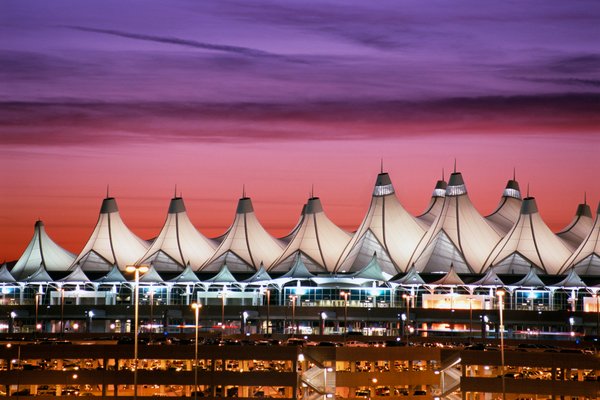
Travelers navigating U.S. airports should consider their walking stamina, as a recent analysis reveals significant differences in walking distances from airport entrances to departure gates. According to research conducted by KURU Footwear, a brand specializing in pain-relief footwear, some airports require passengers to traverse substantial distances, potentially exceeding 20 minutes to reach their boarding gates.
The study involved a detailed examination of airport maps and terminal data to determine the longest and shortest walking routes at major airports. The findings highlight the importance of sensible footwear when planning air travel.
Airports with the Longest Walking Distances
The airport requiring the most walking is Dallas/Fort Worth International Airport, where travelers must cover a distance of approximately 1.5 miles from the main entrance to the farthest gate. Following closely is Denver International Airport, with a walking distance of 1.14 miles.
In third place is Washington Dulles International Airport, with a distance of 0.97 miles. Pittsburgh International Airport ranks fourth, necessitating a walk of 0.86 miles, while Orlando International Airport rounds out the top five with a distance of 0.7 miles.
Airports with the Shortest Walking Distances
On the other end of the spectrum, several airports offer notably shorter walking distances. Trenton–Mercer Airport claims the title for the shortest distance, requiring only 0.03 miles to reach the gate. Seattle Paine Field International Airport follows closely with a distance of 0.04 miles.
In third place is Tweed New Haven Airport, where passengers walk just 0.05 miles. Lihue Airport on the island of Kauaʻi ranks fourth with a distance of 0.06 miles, and Harrisburg International Airport completes the list of shortest distances at 0.12 miles.
These findings serve as a reminder for travelers to consider practical footwear options, especially when navigating larger airports. As travel continues to recover post-pandemic, understanding the layout and accessibility of airport terminals can enhance the overall travel experience.

Hallmark Premieres ‘Christmas at the Catnip Café’ Tonight!

Millville Woman Arrested After Threatening U-Haul Worker with Baton

Japan’s PM Takaichi Vows to Prioritize Fiscal Management NOW

Long Island Faces Disruptive Winter Weather Tuesday Morning

Urgent: 18-Year-Old Killed in Triple Shooting in Bronzeville

Shark Teeth Reveal Urgent Insights to Prevent Extinction

Englewood Church Members Reunite After Thanksgiving Fire

Mayor Names Alan Wong as District 4 Supervisor Amid Controversy

Study Reveals Nitrous Oxide’s Potential in Treating Depression

University of Hawaiʻi Joins $25.6M AI Project to Monitor Disasters

Foreign Inflows into Japan Stocks Surge to ¥1.34 Trillion

BOYNEXTDOOR’s Jaehyun Faces Backlash Amid BTS-TWICE Controversy

Carson Wentz Out for Season After Shoulder Surgery: Urgent Update

Marc Buoniconti’s Legacy: 40 Years Later, Lives Transformed

Innovative Surgery Restores Confidence for Breast Cancer Patients

Kelsea Ballerini Launches ‘Burn the Baggage’ Candle with Ranger Station

Steve Kerr Supports Jonathan Kuminga After Ejection in Preseason Game

Chicago’s Viral ‘Rat Hole’ Likely Created by Squirrel, Study Reveals
-
Science4 weeks ago
University of Hawaiʻi Joins $25.6M AI Project to Monitor Disasters
-
Business1 month ago
Foreign Inflows into Japan Stocks Surge to ¥1.34 Trillion
-
 Top Stories1 month ago
BOYNEXTDOOR’s Jaehyun Faces Backlash Amid BTS-TWICE Controversy
-
 Top Stories1 month ago
Carson Wentz Out for Season After Shoulder Surgery: Urgent Update
-
 Top Stories1 month ago
Marc Buoniconti’s Legacy: 40 Years Later, Lives Transformed
-
 Health1 month ago
Innovative Surgery Restores Confidence for Breast Cancer Patients
-
 Lifestyle2 months ago
Kelsea Ballerini Launches ‘Burn the Baggage’ Candle with Ranger Station
-
 Sports2 months ago
Steve Kerr Supports Jonathan Kuminga After Ejection in Preseason Game
-
 Science2 months ago
Chicago’s Viral ‘Rat Hole’ Likely Created by Squirrel, Study Reveals
-

 Lifestyle2 months ago
Dua Lipa Celebrates Passing GCSE Spanish During World Tour
-

 Entertainment2 months ago
Zoe Saldana Advocates for James Cameron’s Avatar Documentary
-

 Business2 months ago
Tyler Technologies Set to Reveal Q3 2025 Earnings on October 22