
Top Stories
COP30 Closes Amid Chaos, Climate Deal Leaves Fossil Fuels Unaddressed

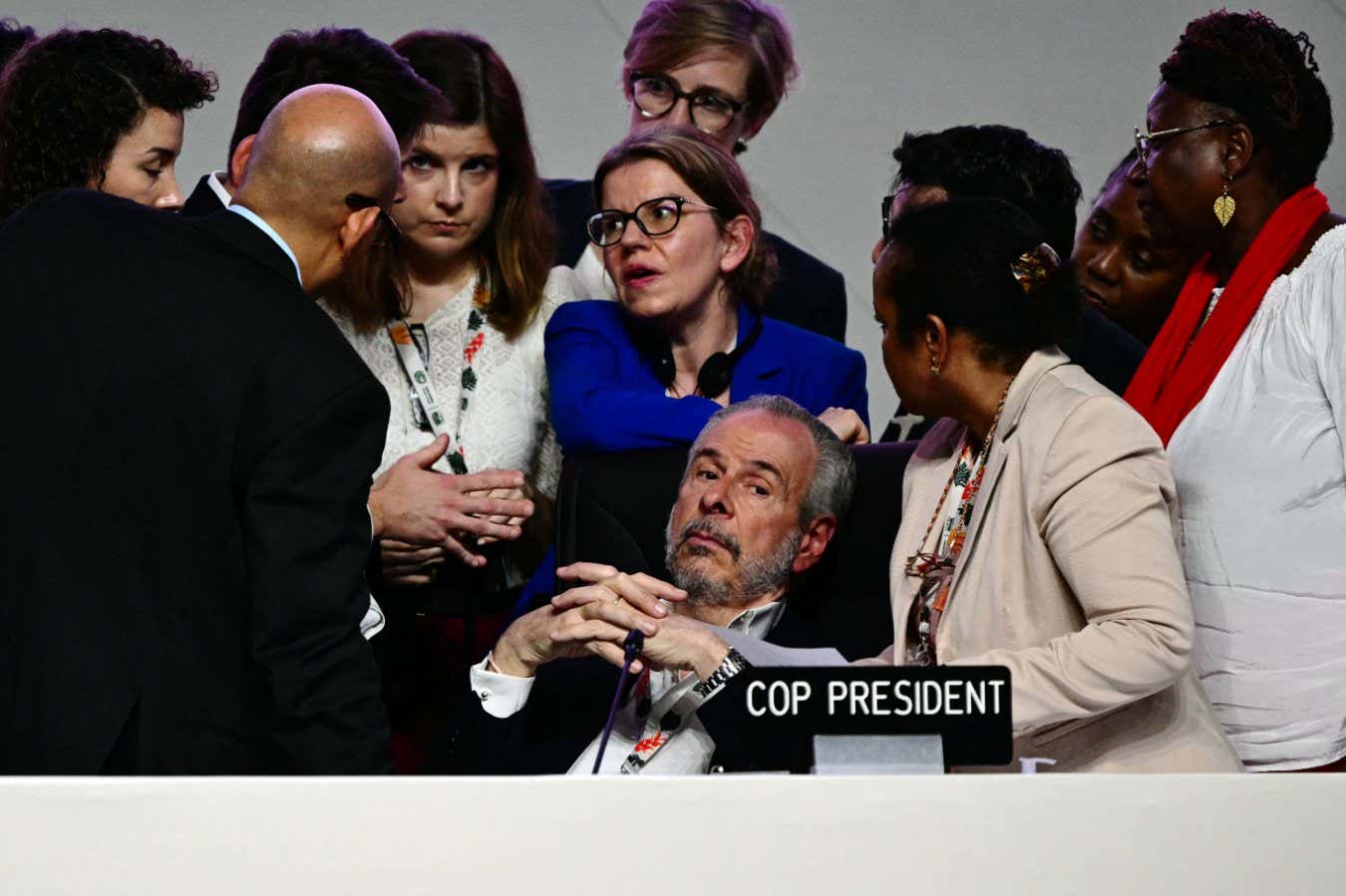
UPDATE: The UN’s COP30 climate summit in Brazil has concluded amidst significant turmoil, revealing the fragile state of international climate cooperation. Torrential rainfall, protests, and even an electrical fire marred the event, yet it underscored a shared commitment among nations—except for the United States—to tackle climate change.
After a chaotic final session that saw objections over weak agreements, COP30 culminated without addressing fossil fuels, the primary driver behind nearly three-quarters of greenhouse gas emissions. Over 80 countries pushed for a roadmap to transition away from fossil fuels, but oil-producing nations successfully removed it from the final texts.
Brazilian delegate Diana Mejia expressed frustration, stating, “A consensus imposed under climate denialism is a failed agreement.” Despite this, Brazil promised to assist in developing a fossil fuel transition roadmap outside the UN framework. “It’s like making a board game,” said Natalie Jones from the International Institute for Sustainable Development, highlighting the ongoing disputes over climate action.
In closing remarks, UN climate secretary Simon Stiell acknowledged that COP30 demonstrated resilience amid adversity. The summit faced setbacks, including the United States’ withdrawal from the COP process under former President Donald Trump and Argentina’s threats to exit as well.
Countries underscored their unity behind the Paris Agreement, with many viewing COP30 as a crucial moment for multilateralism. Joanna Depledge, a COP historian, noted that the commitments made during the summit act as a “powerful pushback” against past U.S. policies that undermined climate negotiations.
However, the summit also highlighted significant gaps. COP30 did not finalize a roadmap to halt deforestation, despite over 90 countries advocating for one. Brazil’s initiative, the Tropical Forests Forever Facility, aims to fund forest preservation but fell short of its $25 billion goal, securing only $6.6 billion in commitments.
Compounding the urgency is the alarming trajectory of global warming, with the world currently on course for a temperature rise of 2.6°C—a stark contrast to the well below 2°C target set during the Paris Agreement.
While COP30 agreed to develop a “just transition mechanism” to support low-income countries, the specifics of financial assistance remain vague. Harjeet Singh from the Satat Sampada Climate Foundation voiced disappointment, stating, “Apart from the just transition mechanism… I don’t have anything to celebrate. We should have done much better.”
As COP30 wraps up in Belém, the immediate future of climate cooperation hangs in the balance. With major emitters pulling back and funding for climate adaptation dwindling, the world awaits clarity on how nations will move forward.
The message is clear: international collaboration is crucial, but the path ahead is fraught with challenges. As the COP30 summit illustrates, the stakes have never been higher, and the global community must rally for effective climate action.

Elon Musk Claims AI Will Resolve U.S. Debt Crisis in 3 Years

Shai Gilgeous-Alexander Eyes Wilt Chamberlain’s Scoring Record

Knicks Dominate Raptors 116-94, Extend Home Win Streak to 10

Hallmark Premieres ‘Christmas at the Catnip Café’ Tonight!

Millville Woman Arrested After Threatening U-Haul Worker with Baton

Japan’s PM Takaichi Vows to Prioritize Fiscal Management NOW

Long Island Faces Disruptive Winter Weather Tuesday Morning

Urgent: 18-Year-Old Killed in Triple Shooting in Bronzeville

Shark Teeth Reveal Urgent Insights to Prevent Extinction

University of Hawaiʻi Joins $25.6M AI Project to Monitor Disasters

Foreign Inflows into Japan Stocks Surge to ¥1.34 Trillion

BOYNEXTDOOR’s Jaehyun Faces Backlash Amid BTS-TWICE Controversy

Carson Wentz Out for Season After Shoulder Surgery: Urgent Update

Marc Buoniconti’s Legacy: 40 Years Later, Lives Transformed

Innovative Surgery Restores Confidence for Breast Cancer Patients

Steve Kerr Supports Jonathan Kuminga After Ejection in Preseason Game

Kelsea Ballerini Launches ‘Burn the Baggage’ Candle with Ranger Station

Chicago’s Viral ‘Rat Hole’ Likely Created by Squirrel, Study Reveals
-
Science4 weeks ago
University of Hawaiʻi Joins $25.6M AI Project to Monitor Disasters
-
Business1 month ago
Foreign Inflows into Japan Stocks Surge to ¥1.34 Trillion
-
 Top Stories1 month ago
BOYNEXTDOOR’s Jaehyun Faces Backlash Amid BTS-TWICE Controversy
-
 Top Stories1 month ago
Carson Wentz Out for Season After Shoulder Surgery: Urgent Update
-
 Top Stories1 month ago
Marc Buoniconti’s Legacy: 40 Years Later, Lives Transformed
-
 Health1 month ago
Innovative Surgery Restores Confidence for Breast Cancer Patients
-
 Sports2 months ago
Steve Kerr Supports Jonathan Kuminga After Ejection in Preseason Game
-
 Lifestyle2 months ago
Kelsea Ballerini Launches ‘Burn the Baggage’ Candle with Ranger Station
-
 Science2 months ago
Chicago’s Viral ‘Rat Hole’ Likely Created by Squirrel, Study Reveals
-

 Entertainment2 months ago
Zoe Saldana Advocates for James Cameron’s Avatar Documentary
-

 Lifestyle2 months ago
Dua Lipa Celebrates Passing GCSE Spanish During World Tour
-

 Business2 months ago
Tyler Technologies Set to Reveal Q3 2025 Earnings on October 22