
Top Stories
Urgent Update: AI Deep-Fakes Disrupt Georgia Politics, Greene Reacts

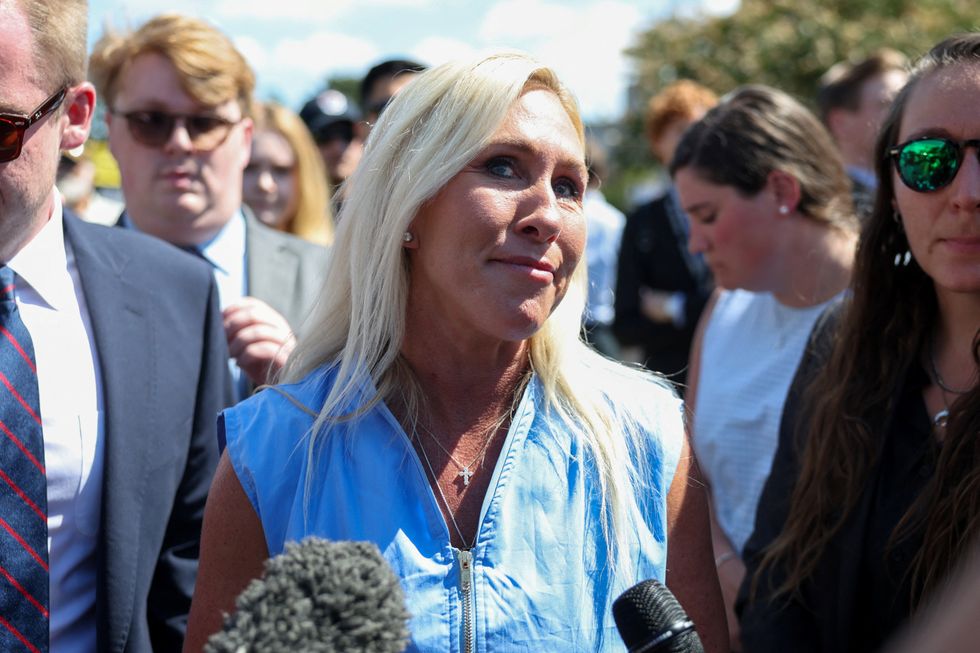
BREAKING: In a shocking turn of events, AI-generated deep-fake videos are shaking up Georgia’s political landscape, raising urgent concerns about misinformation ahead of the upcoming elections. This new technology is complicating the already murky waters of political truth, particularly for candidates like U.S. Rep. Marjorie Taylor Greene and her rivals.
Just yesterday, a video surfaced that appears to show Greene expressing regret for her past political tactics, claiming, “I want to see people be kind to one another.” Is it real or an AI fabrication? While some claim it’s genuine, the growing prevalence of deep-fakes makes discerning fact from fiction increasingly difficult. Greene’s remarks come after she was reportedly told by top Republicans, including Donald Trump, that her political future may be limited to Georgia’s 14th Congressional District.
This shift in Greene’s rhetoric comes at a pivotal moment as she navigates her political identity. In 2023, she openly considered aspirations for higher office, including a potential role in Trump’s Cabinet. Greene’s recent statements, however, appear to be a calculated response to her diminishing prospects, reflecting a deeper frustration rather than a genuine transformation.
Meanwhile, the U.S. Senate race is also embroiled in controversy. Mike Collins, frontrunner for the GOP nomination, has unleashed a deep-fake video featuring incumbent Jon Ossoff. The clip falsely depicts Ossoff dismissing concerns over a recent government shutdown’s impact on farmers, claiming he only cares about out-of-state donors. This deceptive content has sparked outrage from the Ossoff campaign, which condemned the use of deep-fakes and vowed never to employ such tactics.
Collins, however, remains unapologetic, stating, “It’s just new technology, a new way to campaign.” This attitude highlights a troubling trend: the erosion of ethical campaigning standards in favor of technological advancements. As Collins embraces this strategy, he risks leading voters into a chaotic landscape where the lines between reality and fantasy blur further.
The implications of deep-fake technology in politics are profound. As Jay Bookman, a seasoned political journalist, notes, the potential for misinformation can undermine democratic processes. He emphasizes that while politics has never been free of deception, the introduction of AI-driven content could lead to unprecedented chaos if left unchecked.
As the race heats up, voters must remain vigilant. With technology evolving at breakneck speed, the urgency for clear communication and truthful campaigning has never been greater. Citizens are encouraged to critically evaluate the media they consume, especially in an era where AI can fabricate convincing narratives.
What happens next? With the election season approaching, expect to see more instances of deep-fake technology employed in campaigns. Candidates who choose to exploit these tools risk damaging the trust necessary for a functioning democracy. As Georgia grapples with these challenges, the need for accountability in political discourse is crucial.
Stay tuned for more updates as this story develops. The stakes are high, and the integrity of our political landscape hangs in the balance.

Englewood Church Members Reunite After Thanksgiving Fire

Mayor Names Alan Wong as District 4 Supervisor Amid Controversy

Study Reveals Nitrous Oxide’s Potential in Treating Depression

Walmart Launches Massive Cyber Monday Sales Starting at $5

Rep. Don Bacon Criticizes White House for Lack of Clarity on Ukraine

UK Report Reveals Rise of AI in University Research Evaluation

Florida Hires Jon Sumrall as Head Coach: Implications for FSU Football

Trump Promises to Release MRI Results from October Scan

South Korea Implements Urgent FX Oversight Amid Market Instability

University of Hawaiʻi Joins $25.6M AI Project to Monitor Disasters

Foreign Inflows into Japan Stocks Surge to ¥1.34 Trillion

BOYNEXTDOOR’s Jaehyun Faces Backlash Amid BTS-TWICE Controversy

Carson Wentz Out for Season After Shoulder Surgery: Urgent Update

Marc Buoniconti’s Legacy: 40 Years Later, Lives Transformed

Innovative Surgery Restores Confidence for Breast Cancer Patients

Kelsea Ballerini Launches ‘Burn the Baggage’ Candle with Ranger Station

Steve Kerr Supports Jonathan Kuminga After Ejection in Preseason Game

Chicago’s Viral ‘Rat Hole’ Likely Created by Squirrel, Study Reveals
-
Science4 weeks ago
University of Hawaiʻi Joins $25.6M AI Project to Monitor Disasters
-
Business1 month ago
Foreign Inflows into Japan Stocks Surge to ¥1.34 Trillion
-
 Top Stories1 month ago
BOYNEXTDOOR’s Jaehyun Faces Backlash Amid BTS-TWICE Controversy
-
 Top Stories1 month ago
Carson Wentz Out for Season After Shoulder Surgery: Urgent Update
-
 Top Stories1 month ago
Marc Buoniconti’s Legacy: 40 Years Later, Lives Transformed
-
 Health1 month ago
Innovative Surgery Restores Confidence for Breast Cancer Patients
-
 Lifestyle2 months ago
Kelsea Ballerini Launches ‘Burn the Baggage’ Candle with Ranger Station
-
 Sports2 months ago
Steve Kerr Supports Jonathan Kuminga After Ejection in Preseason Game
-
 Science2 months ago
Chicago’s Viral ‘Rat Hole’ Likely Created by Squirrel, Study Reveals
-

 Lifestyle2 months ago
Dua Lipa Celebrates Passing GCSE Spanish During World Tour
-

 Entertainment2 months ago
Zoe Saldana Advocates for James Cameron’s Avatar Documentary
-

 Politics2 months ago
Dallin H. Oaks Assumes Leadership of Latter-day Saints Church