
Science
Astronomers Discover Signs of Decelerating Universe Expansion

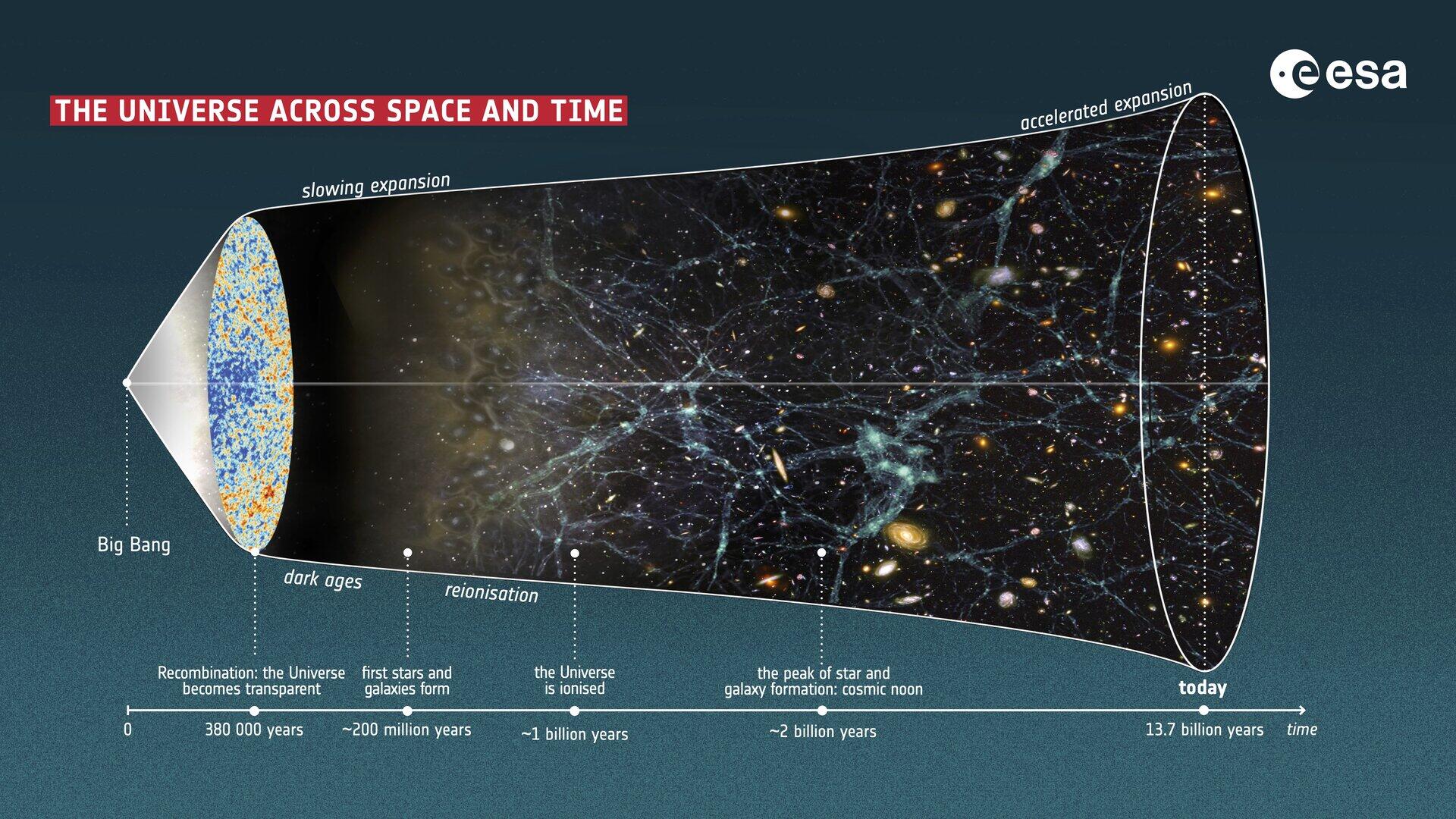
A recent study has presented compelling evidence suggesting that the universe is currently experiencing a phase of decelerated expansion. Researchers have identified what they describe as a “Hubble residual,” which indicates a correlation between the age of the universe and its expansion rate. This discovery could significantly alter the current understanding of cosmology.
According to the lead researcher, Professor Young-Wook Lee from Yonsei University in South Korea, the findings indicate that the influence of dark energy on the universe’s expansion is evolving more rapidly than previously thought. “Our study shows that the universe has already entered a phase of decelerated expansion at the present epoch,” Professor Lee stated. “If these results are confirmed, it would mark a major paradigm shift in cosmology since the discovery of dark energy 27 years ago.”
The research highlights the importance of revisiting established cosmological theories. Dark energy, which has been understood as a driver of the universe’s accelerating expansion since its discovery in 1998, may not have the same impact going forward. The implications of this shift could lead to new insights into the fundamental workings of the universe.
Understanding the Hubble Residual
The term “Hubble residual” refers to the difference between the observed distances of supernovae and the distances predicted by the expanding universe model. This residual can provide crucial insights into the age of the universe and its expansion dynamics. The researchers utilized extensive statistical analyses to support their findings, demonstrating a robust relationship between the Hubble residual and the age of various cosmic structures.
As scientists continue to investigate these results, they highlight the need for further validation through additional studies. The implications of a decelerating universe could reshape the understanding of cosmic evolution and lead to new theories regarding the fate of the universe.
The Future of Cosmology
This study invites a reevaluation of long-held beliefs about dark energy and the universe’s expansion. If corroborated by further research, it may pave the way for a new era in cosmology, challenging established models and prompting scientists to explore alternative explanations for cosmic phenomena.
The ongoing exploration of the universe’s expansion is critical for understanding not only its past but also its future. As researchers work to confirm these findings, the scientific community remains on alert for what could be a transformative moment in the field of cosmology. With advancements in observational technology and methodology, the quest to decipher the universe’s secrets continues, driven by curiosity and the pursuit of knowledge.

Heidi Klum Stuns in Sculpted Naked Dress at 2026 Grammys

Beaufort Man Arrested in Hit-and-Run; Two Pedestrians Injured

KORU Medical Systems Sees 21.4% Drop in Short Interest in January

NASA’s WB-57: High-Altitude Research Aircraft Takes Flight

Chunghwa Telecom Sees 21.6% Drop in Short Interest for January

Claim Your $250 Bet Match NOW for Lakers vs. Knicks Showdown!

Court Ruling Affirms Panama Canal Independence from China

Waldencast PLC Sees 25.7% Drop in Short Interest in January

Selena Gomez Raps Kendrick Lamar’s “Not Like Us” in Viral Clip

University of Hawaiʻi Joins $25.6M AI Project to Monitor Disasters

Foreign Inflows into Japan Stocks Surge to ¥1.34 Trillion

Hudson Williams Gains Popularity as Breakout Star on Heated Rivalry

Boeing’s Merger with McDonnell Douglas: A Strategic Move Explained

$1.25M Grant Advances Hawaiʻi’s Real-Time Hazard Monitoring

Sydney Sweeney Embraces Body Positivity Amid Hollywood Challenges

BOYNEXTDOOR’s Jaehyun Faces Backlash Amid BTS-TWICE Controversy

Urgent Farewell: Joleen Chaney Leaves Legacy at KFOR

French Film Explores Group Therapy in ‘Group – The Schopenhauer Project’
-
Science3 months ago
University of Hawaiʻi Joins $25.6M AI Project to Monitor Disasters
-
Business3 months ago
Foreign Inflows into Japan Stocks Surge to ¥1.34 Trillion
-
 Entertainment2 months ago
Hudson Williams Gains Popularity as Breakout Star on Heated Rivalry
-
 World3 months ago
Boeing’s Merger with McDonnell Douglas: A Strategic Move Explained
-
 Science2 months ago
$1.25M Grant Advances Hawaiʻi’s Real-Time Hazard Monitoring
-
 Entertainment3 months ago
Sydney Sweeney Embraces Body Positivity Amid Hollywood Challenges
-
 Top Stories3 months ago
BOYNEXTDOOR’s Jaehyun Faces Backlash Amid BTS-TWICE Controversy
-
 Top Stories3 months ago
Urgent Farewell: Joleen Chaney Leaves Legacy at KFOR
-
 World3 months ago
French Film Explores Group Therapy in ‘Group – The Schopenhauer Project’
-

 Top Stories3 months ago
Marc Buoniconti’s Legacy: 40 Years Later, Lives Transformed
-

 Lifestyle4 months ago
Kelsea Ballerini Launches ‘Burn the Baggage’ Candle with Ranger Station
-

 Top Stories3 months ago
Carson Wentz Out for Season After Shoulder Surgery: Urgent Update