
Science
Astronomers Unveil Secrets of the Milky Way’s Hidden Black Hole

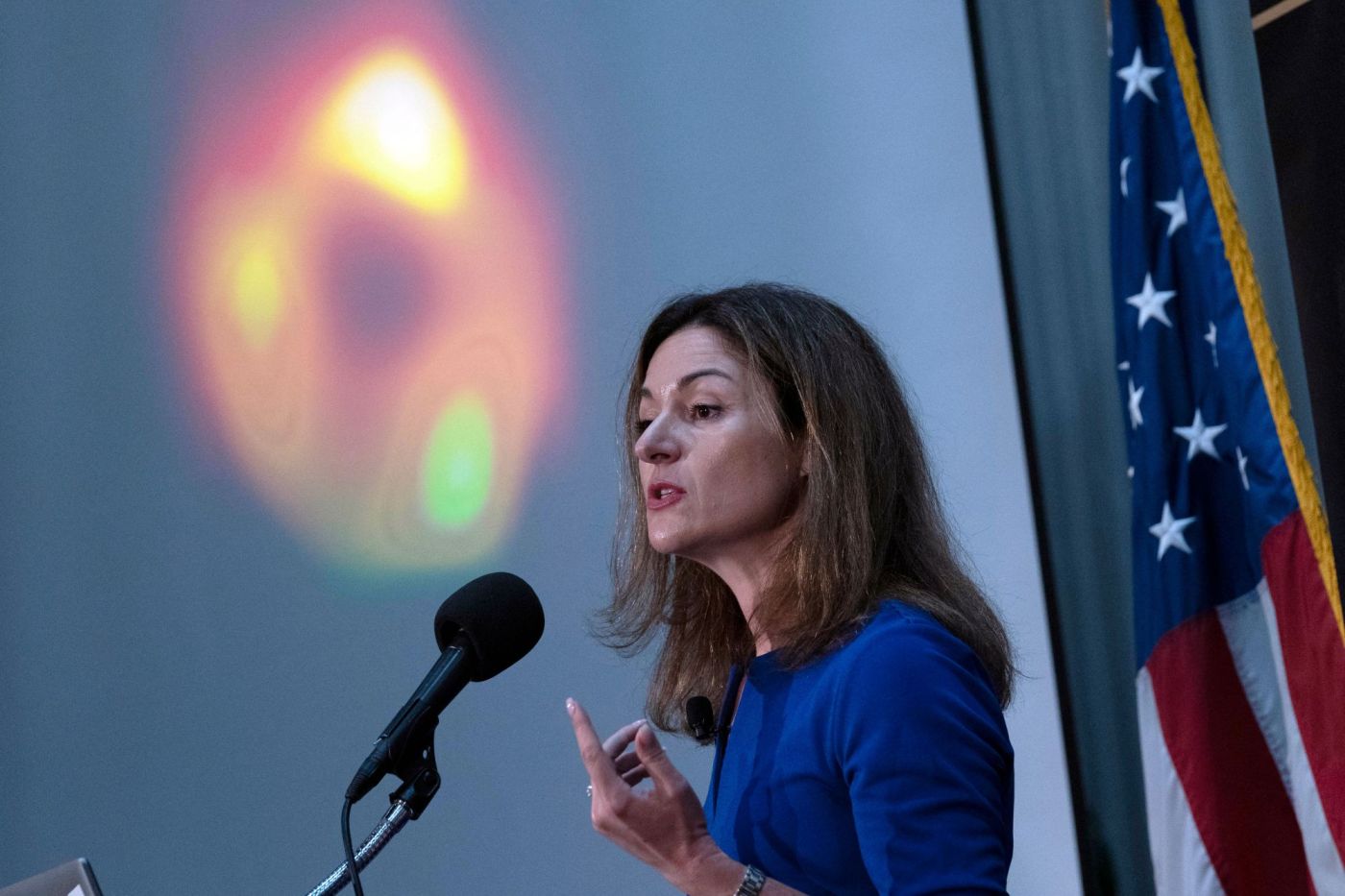
A groundbreaking discovery has revealed the presence of a supermassive black hole at the center of the Milky Way galaxy, known as Sagittarius A* (pronounced “Sagittarius A-star” and abbreviated as Sgr A*). This hidden entity emits significant energy in the form of X-rays and radio waves, surpassing what would typically be expected from a star-sized object. After extensive research on the movements of nearby stars, astronomers estimate that Sgr A* possesses a mass of approximately 4.3 million solar masses, while its physical size is comparable to that of a red supergiant star, such as Antares.
The identification of Sgr A* as a supermassive black hole was solidified by the work of Reinhard Genzel and Andrea Ghez, who were awarded half of the Nobel Prize in Physics in 2000 for their pioneering research. The other half of the prize recognized Sir Roger Penrose for his contributions to the understanding of black holes and general relativity.
Historical Milestones in Black Hole Research
The journey toward understanding Sgr A* began in 1931 when Karl Jansky, a researcher at Bell Telephone Laboratories, detected radio waves from an unknown source in the constellation of Sagittarius. This source was later confirmed to be extraterrestrial in origin and was designated as Sagittarius A (Sgr A).
Following World War II, advancements in radio antenna technology allowed astronomers to utilize these instruments as telescopes, significantly enhancing the capacity for mapping the sky at radio frequencies. Throughout the subsequent decades, radio telescopes were developed in various locations worldwide, including the United States, the United Kingdom, and Australia.
In 1974, astronomers Bruce Balick and Robert L. Brown made a pivotal discovery using the National Radio Astronomy Observatory’s baseline interferometer in Virginia. They identified that the strongest radio emissions from the galaxy’s center were due to a compact radio source embedded within a larger, brighter entity, Sgr A. This observation indicated that Sgr A is the brightest radio source in the night sky.
By analyzing the orbits of stars around Sgr A*, particularly a star named S2, researchers have been able to ascertain its mass and the constraints on its radius. These findings led to the conclusion that Sgr A* is indeed the supermassive black hole at the heart of the Milky Way, situated approximately 26,000 light years from Earth.
The Nature of Black Holes
Black holes can be classified into different categories based on their formation processes. Ordinary black holes emerge when massive stars, typically greater than eight solar masses, exhaust their nuclear fuel. This results in a rapid core collapse, followed by a supernova explosion that ejects a portion of the star’s mass into space. If the core remnant exceeds about three solar masses, the gravitational field surrounding it warps space-time to such an extent that light cannot escape, leading to the formation of a “normal” stellar-mass black hole.
In contrast, supermassive black holes, like Sgr A*, can reach millions or even billions of solar masses. It is believed that these colossal entities formed during the early epochs of galaxy creation, over 12 billion years ago, and are positioned at the centers of large spiral and elliptical galaxies. For instance, the Messier 87 galaxy, located in the constellation Virgo, contains a supermassive black hole estimated to weigh around 6.5 billion solar masses, making it over a thousand times more massive than its counterpart in the Milky Way.
The first-ever image of a black hole was captured in 2019, showing the supermassive black hole at the center of M87. Following this significant achievement, the first image of the accretion disk surrounding Sgr A* was unveiled on May 12, 2022, by astronomers utilizing the Event Horizon Telescope, a global network of radio observatories. While the black hole itself remains invisible, the behavior of nearby objects influenced by its immense gravitational pull can be observed, with energy emissions originating from clouds of gas and dust heated to millions of degrees as they spiral into the black hole.
As a result of these discoveries, the study of Sgr A* continues to unfold, revealing the complexities of our galaxy’s center. The next time you gaze at the constellation Sagittarius on a clear evening, consider that hidden beyond its stars lies the core of the Milky Way, home to an intriguing and powerful force: a supermassive black hole.
This research not only enhances our understanding of black holes but also deepens our knowledge of the universe. As Augensen, director of the Widener University Observatory and emeritus professor of physics and astronomy at Widener University, notes, the ongoing exploration of Sgr A* will likely yield further insights into the nature of these enigmatic cosmic phenomena.

Cosmic Mystery Deepens: Where Are the Universe’s Defects?

Lady Bulldogs Shine in Postseason Awards Following Final Four Run

CALV Hosts Essential Class for Local Real Estate Professionals

Urgent Alert: “Spaving” Surges as Shoppers Overspend Online

Jefferies Initiates Coverage on Insmed with “Buy” Rating

Three Dog Night to Perform with Ambrosia at Mayo Civic Center

Urgent Announcement: Charles M. Payment Passes Away at 78

Houston Education Foundation Donates $4,592 for Student Programs

Beeks Financial Cloud Shares Drop 7% Amid Increased Trading Volume

Foreign Inflows into Japan Stocks Surge to ¥1.34 Trillion

University of Hawaiʻi Joins $25.6M AI Project to Monitor Disasters

Sydney Sweeney Embraces Body Positivity Amid Hollywood Challenges

Hudson Williams Gains Popularity as Breakout Star on Heated Rivalry

Urgent Farewell: Joleen Chaney Leaves Legacy at KFOR

Boeing’s Merger with McDonnell Douglas: A Strategic Move Explained

$1.25M Grant Advances Hawaiʻi’s Real-Time Hazard Monitoring

Derrick Dove and ABAC Band Set for Free Americana Concert

BOYNEXTDOOR’s Jaehyun Faces Backlash Amid BTS-TWICE Controversy
-
Business9 months ago
Foreign Inflows into Japan Stocks Surge to ¥1.34 Trillion
-
Science9 months ago
University of Hawaiʻi Joins $25.6M AI Project to Monitor Disasters
-
 Entertainment9 months ago
Sydney Sweeney Embraces Body Positivity Amid Hollywood Challenges
-
 Entertainment7 months ago
Hudson Williams Gains Popularity as Breakout Star on Heated Rivalry
-
 Top Stories8 months ago
Urgent Farewell: Joleen Chaney Leaves Legacy at KFOR
-
 World9 months ago
Boeing’s Merger with McDonnell Douglas: A Strategic Move Explained
-
 Science7 months ago
$1.25M Grant Advances Hawaiʻi’s Real-Time Hazard Monitoring
-
 Entertainment8 months ago
Derrick Dove and ABAC Band Set for Free Americana Concert
-
 Top Stories9 months ago
BOYNEXTDOOR’s Jaehyun Faces Backlash Amid BTS-TWICE Controversy
-

 Health6 months ago
Bodybuilder Eugene Teo Transitions to Mindful Movement for Health
-

 World6 months ago
San Francisco Airport to Host 16 Nonstop Airlines to Europe in 2026
-

 Top Stories7 months ago
National Coast Guard Museum Set to Open in 2027 After Funding Secured