
World
U.S. Faces Moral Decision Amid Iran’s Protests and Brutality

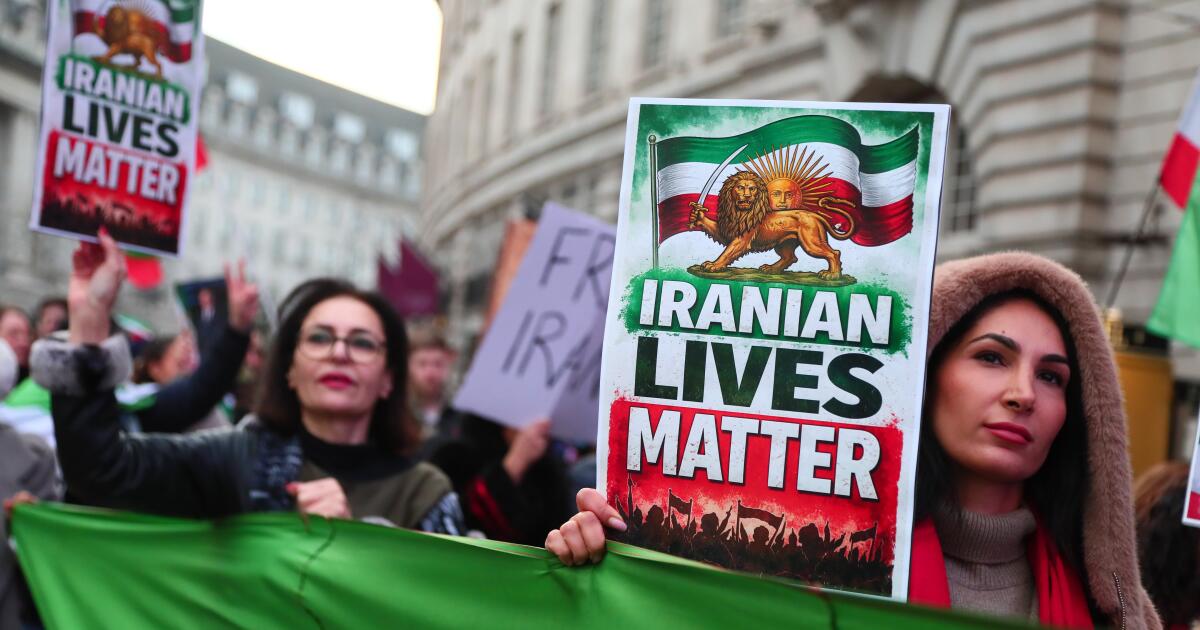
The ongoing protests in Iran have escalated into a significant crisis, with demonstrators facing severe violence from government forces. Reports indicate that Iranian protesters are encountering live ammunition in the streets of Tehran, as women risk execution for defying hijab mandates. With estimates of between 12,000 to 20,000 fatalities linked to the government’s crackdown on dissent, the regime appears increasingly vulnerable. This situation presents a critical moment for the United States, as the Trump administration is called to act decisively to support regime change before the opportunity fades.
For nearly five decades, the Iranian regime has maintained a totalitarian grip on power. It has not only terrorized its citizens but has also engaged in international terrorism, supporting groups like Hezbollah and Hamas, and supplying weaponry to adversaries such as Russia. The Supreme Leader, Ali Khamenei, has ordered that all protesters be “put in their place,” with the judiciary threatening to prosecute participants for moharebeh, which translates to “enmity against God” and carries a death penalty.
As the Iranian people continue their struggle for freedom, the response from the international community has been muted. Joseph Nye, a prominent scholar, emphasized that the morality of foreign policy hinges on integrating intentions, means, and consequences. The U.S. has articulated its support for the Iranian populace but now faces a pivotal choice: to act in alignment with its stated values or to allow bureaucratic inertia to dictate its response.
The current global political climate has seen a disturbing trend of selective moral outrage. In Nigeria, for instance, violence against Christians has resulted in the loss of approximately 7,087 lives in less than a year. Similarly, the situation in Sudan has seen 3,384 civilian deaths in the first half of 2025 alone, with Genocide Watch categorizing the situation as stage nine: extermination. Despite this, calls for action often receive little attention unless they fit a specific narrative.
This selectivity extends to the Tudeh Party, Iran’s communist faction, which has condemned the protests while invoking anti-imperialism as a means to silence voices advocating for change. Some progressive Iranian American academics have dismissed the aspirations for reform, viewing them as Western impositions. This ideological conflict undermines the fundamental rights of those seeking freedom.
The stakes of the Iranian crisis extend beyond its borders. The principle of state sovereignty, established by the Treaty of Westphalia in 1648, has often been weaponized to shield oppressive regimes. The post-1945 international order expected sovereign states to protect their citizens’ rights, with the global community stepping in when they failed. The pressing question is whether the U.S. will uphold the notion that sovereignty should be conditional upon the protection of its citizens.
To support the Iranian people effectively, a multifaceted approach is required. First, the U.S. must clearly affirm its backing for the right of Iranians to choose their government and reject continued mullah rule. Second, imposing stringent sanctions targeting the regime’s economic base should be prioritized, alongside ensuring humanitarian assistance reaches those in need. Third, bolstering communications infrastructure is essential for protesters to coordinate amidst censorship efforts. Fourth, diplomatic isolation of the regime and coalition-building with like-minded nations must be pursued. Lastly, tangible support for opposition groups is necessary to shift the balance of power.
The Trump administration must recognize this moment as a defining test of American leadership. Failing to act would send a message to authoritarian regimes worldwide that the West lacks resolve. It would also signal to oppressed populations that American principles are nothing more than empty rhetoric. Conversely, taking decisive action to support the Iranian people’s quest for freedom can reaffirm that moral principles still hold significance in international relations.
The founders of the United States, including Thomas Jefferson, understood that rights stem from a higher authority, not from the state. They established a republic grounded in transcendent moral laws. Today, the Iranian people are asking for the international community, particularly the U.S., to honor these principles through concrete action. Protesters are risking their lives for freedom, trusting that America represents more than just geopolitical interests.
The time for decisive action is now. Delaying our response will only allow the Iranian regime to consolidate its power and intensify its brutality. The fate of Iran and the moral credibility of the international order hang in the balance. The choice is clear: support the Iranian people’s fight for freedom or watch another opportunity for liberation slip away as hesitation prevails. History will remember the decision made in this critical juncture.

Jane Seymour Celebrates Life at 74, Claims She’s in Her Prime

Mamdani Unveils 50 New Shelter Beds as Cold Weather Claims 14 Lives

House Speaker Mike Johnson Aims for Government Shutdown Resolution by Tuesday

Lawyer Warns of Trump’s 2026 Election Threat: “Complacency is Dangerous”

Shark Bites Surge Linked to Climate Change and Ecosystem Shifts

NASCAR Clash Delayed Due to Snow, Rescheduled for Monday

Boeing and Lockheed Martin Battle for Fighter Jet Dominance

Golden Link Chapter No. 204 Honors Kijahfha Mahoney with Service Award

Gigachad Price Falls to $0.0025 Amid Market Fluctuations

University of Hawaiʻi Joins $25.6M AI Project to Monitor Disasters

Foreign Inflows into Japan Stocks Surge to ¥1.34 Trillion

Hudson Williams Gains Popularity as Breakout Star on Heated Rivalry

Boeing’s Merger with McDonnell Douglas: A Strategic Move Explained

$1.25M Grant Advances Hawaiʻi’s Real-Time Hazard Monitoring

Sydney Sweeney Embraces Body Positivity Amid Hollywood Challenges

BOYNEXTDOOR’s Jaehyun Faces Backlash Amid BTS-TWICE Controversy

French Film Explores Group Therapy in ‘Group – The Schopenhauer Project’

Urgent Farewell: Joleen Chaney Leaves Legacy at KFOR
-
Science3 months ago
University of Hawaiʻi Joins $25.6M AI Project to Monitor Disasters
-
Business3 months ago
Foreign Inflows into Japan Stocks Surge to ¥1.34 Trillion
-
 Entertainment2 months ago
Hudson Williams Gains Popularity as Breakout Star on Heated Rivalry
-
 World3 months ago
Boeing’s Merger with McDonnell Douglas: A Strategic Move Explained
-
 Science2 months ago
$1.25M Grant Advances Hawaiʻi’s Real-Time Hazard Monitoring
-
 Entertainment3 months ago
Sydney Sweeney Embraces Body Positivity Amid Hollywood Challenges
-
 Top Stories3 months ago
BOYNEXTDOOR’s Jaehyun Faces Backlash Amid BTS-TWICE Controversy
-
 World3 months ago
French Film Explores Group Therapy in ‘Group – The Schopenhauer Project’
-
 Top Stories3 months ago
Urgent Farewell: Joleen Chaney Leaves Legacy at KFOR
-

 Top Stories3 months ago
Marc Buoniconti’s Legacy: 40 Years Later, Lives Transformed
-

 Lifestyle4 months ago
Kelsea Ballerini Launches ‘Burn the Baggage’ Candle with Ranger Station
-

 Top Stories3 months ago
Carson Wentz Out for Season After Shoulder Surgery: Urgent Update