
Science
NASA Astronaut to Manually Fly Orion Spacecraft for Artemis II

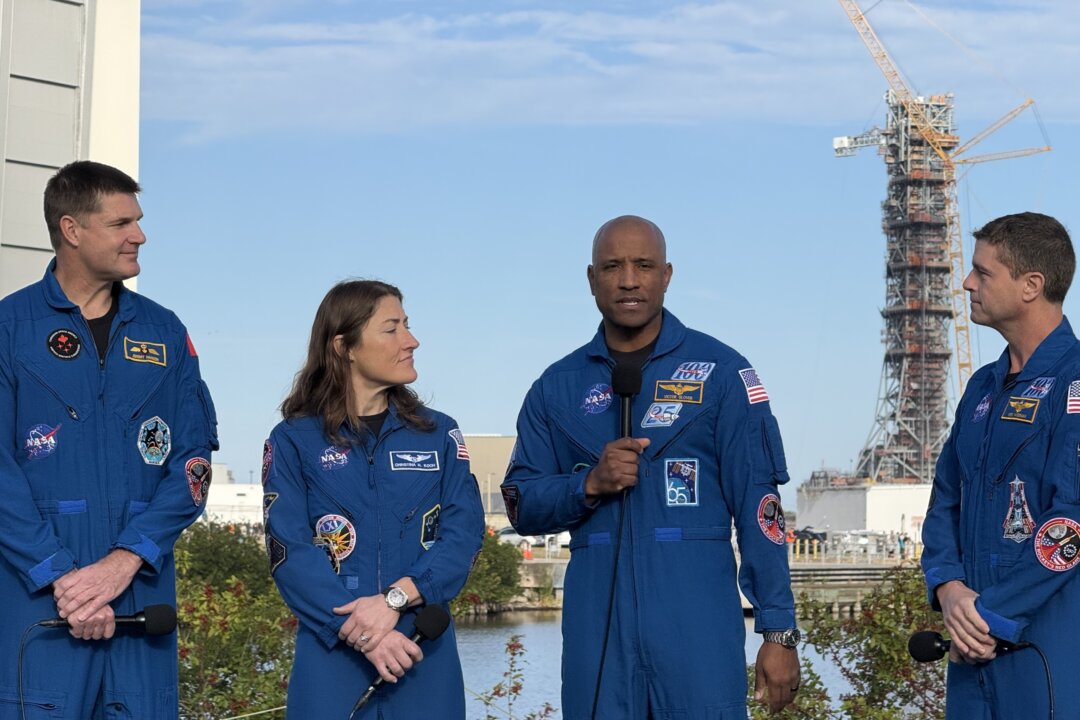
NASA has announced that astronaut Victor Glover will manually pilot the Orion spacecraft during the upcoming Artemis II mission. This historic flight, set to launch from Cape Canaveral, Florida, marks a significant milestone as Glover becomes the first individual to undertake such a task in the current era of space exploration. His journey will include two manual control demonstrations, scheduled at the beginning and end of the ten-day mission.
The Artemis II mission aims to build on the legacy of the Apollo program, which successfully sent astronauts to the Moon. Glover’s manual piloting will echo the achievements of those early astronauts who navigated their spacecraft through the challenges of space travel. The planned demonstrations will not only test Glover’s skills but also provide valuable data for future missions.
Adapting to Advancements in Space Technology
While manual control remains a crucial component of spaceflight, NASA acknowledges that the role of human piloting will evolve as technology continues to advance. As missions become increasingly complex, particularly those venturing into deep space, the integration of automation and artificial intelligence will play a more prominent role.
According to NASA officials, this shift is necessary to enhance safety and efficiency during space missions. The agency is committed to maintaining a balance between human oversight and automated systems, ensuring that astronauts like Glover retain the ability to intervene when necessary.
The Artemis program, which aims to return humans to the Moon and eventually send crewed missions to Mars, represents a new era in space exploration. As part of this initiative, NASA has been investing heavily in research and development to improve spacecraft capabilities, including navigation systems that can assist astronauts in manual flight situations.
Looking Ahead to Future Missions
The Artemis II mission is not just a test of manual piloting; it is also a demonstration of the strong collaboration between astronauts and automated systems. Glover will work alongside his fellow crew members to conduct various scientific experiments and gather data that will inform future missions.
As NASA prepares for this groundbreaking journey, the agency emphasizes the importance of training and readiness for all crew members. Glover’s experience, along with that of his colleagues, is expected to contribute significantly to the success of the mission.
In conclusion, the upcoming Artemis II mission marks a pivotal moment for NASA as it combines the human element of manual control with the advantages of modern technology. As humanity stands on the brink of deeper space exploration, the lessons learned from this mission will undoubtedly shape the future of space travel.

Shark Bites Surge Linked to Climate Change and Ecosystem Shifts

NASCAR Clash Delayed Due to Snow, Rescheduled for Monday

Boeing and Lockheed Martin Battle for Fighter Jet Dominance

Golden Link Chapter No. 204 Honors Kijahfha Mahoney with Service Award

Gigachad Price Falls to $0.0025 Amid Market Fluctuations

Exploring Bortus: The Complex Alien of ‘The Orville’

Harry Potter Quiz Links Personality Traits to Entrepreneurship

Colorado Voters React to Trump’s Immigration Actions Amid Midterms

Donaldson Capital Management Boosts Stake in UnitedHealth Group

University of Hawaiʻi Joins $25.6M AI Project to Monitor Disasters

Foreign Inflows into Japan Stocks Surge to ¥1.34 Trillion

Hudson Williams Gains Popularity as Breakout Star on Heated Rivalry

Boeing’s Merger with McDonnell Douglas: A Strategic Move Explained

$1.25M Grant Advances Hawaiʻi’s Real-Time Hazard Monitoring

Sydney Sweeney Embraces Body Positivity Amid Hollywood Challenges

BOYNEXTDOOR’s Jaehyun Faces Backlash Amid BTS-TWICE Controversy

French Film Explores Group Therapy in ‘Group – The Schopenhauer Project’

Urgent Farewell: Joleen Chaney Leaves Legacy at KFOR
-
Science3 months ago
University of Hawaiʻi Joins $25.6M AI Project to Monitor Disasters
-
Business3 months ago
Foreign Inflows into Japan Stocks Surge to ¥1.34 Trillion
-
 Entertainment2 months ago
Hudson Williams Gains Popularity as Breakout Star on Heated Rivalry
-
 World3 months ago
Boeing’s Merger with McDonnell Douglas: A Strategic Move Explained
-
 Science2 months ago
$1.25M Grant Advances Hawaiʻi’s Real-Time Hazard Monitoring
-
 Entertainment3 months ago
Sydney Sweeney Embraces Body Positivity Amid Hollywood Challenges
-
 Top Stories3 months ago
BOYNEXTDOOR’s Jaehyun Faces Backlash Amid BTS-TWICE Controversy
-
 World3 months ago
French Film Explores Group Therapy in ‘Group – The Schopenhauer Project’
-
 Top Stories3 months ago
Urgent Farewell: Joleen Chaney Leaves Legacy at KFOR
-

 Top Stories3 months ago
Marc Buoniconti’s Legacy: 40 Years Later, Lives Transformed
-

 Lifestyle4 months ago
Kelsea Ballerini Launches ‘Burn the Baggage’ Candle with Ranger Station
-

 Top Stories3 months ago
Carson Wentz Out for Season After Shoulder Surgery: Urgent Update