
World
EU Proposes €90 Billion Loan for Ukraine with Buy-European Condition


The European Commission has proposed a significant loan package of €90 billion ($104.4 billion) for Ukraine, covering the years 2026 and 2027. This proposal introduces a new stipulation requiring Ukraine to prioritize the purchase of weapons and military equipment from European manufacturers. The funding is divided into approximately €60 billion for military assistance and €30 billion for general budget support, as outlined in the Commission’s announcement.
Conditionality and Strategic Independence
The new “buy-European” clause signifies Brussels’ effort to use aid as a means to strengthen Europe’s defense industrial base. This initiative coincides with growing calls for greater strategic independence within Europe and a shifting relationship with the United States, particularly under the administration of President Donald Trump, the world’s largest arms exporter.
Ursula von der Leyen, President of the European Commission, stated, “For us, it is a lot of money. These are billions and billions that are being invested. And these investments should have a return on investment in creating jobs, in creating research and development.” She elaborated that Ukraine could look to third countries “from time to time” if specific military equipment is unavailable in Europe, emphasizing a cascade principle prioritizing European sources.
This conditionality has already led to disagreements among EU member states. Germany expressed its concerns through a letter to EU capitals, indicating that it “does not support proposals to limit third country procurement to certain products and is concerned that this would put excessive restrictions on Ukraine to defend itself.” The Netherlands has echoed similar sentiments, advocating for maximum flexibility in procurement options.
Conversely, France has taken a leading role in supporting the inclusion of the “buy-European” clause in the loan proposal. This divergence in opinions highlights existing tensions within the EU regarding how best to support Ukraine while also fostering European defense capabilities.
Implications for Ukraine and EU Relations
The timing of this proposal is crucial, as President Trump has been advocating for negotiations between Kyiv and Moscow. Von der Leyen has positioned the loan package as vital for Ukraine’s strength, stating, “We all want peace for Ukraine. And for that, Ukraine must be in a position of strength — on the battlefield and at the negotiating table.”
The financing for this loan package will be facilitated through common EU borrowing, utilizing a mechanism termed “enhanced cooperation.” This approach allows willing member states to move forward even if consensus cannot be reached among the entire bloc, effectively sidestepping potential vetoes from governments such as Hungary and Slovakia, which have maintained more Russia-friendly stances.
The proposal now advances to the European Parliament and Council, with the Commission urging prompt adoption to ensure that the first disbursements can commence by the second quarter of 2026. The outcome of this initiative will likely have significant implications for both Ukraine’s defense capabilities and the unity of the European Union in addressing security challenges in the region.

Court Ruling Affirms Panama Canal Independence from China

Waldencast PLC Sees 25.7% Drop in Short Interest in January

Selena Gomez Raps Kendrick Lamar’s “Not Like Us” in Viral Clip

Father and Son Reunited in Minnesota After ICE Detention

Top Infrastructure Stocks to Monitor This February

Stars Shine Bright on the Red Carpet at the GRAMMY Awards

URGENT: Flare Injures Goalkeeper Emil Audero in Italian Match

Jane Seymour Celebrates Life at 74, Claims She’s in Her Prime

Mamdani Unveils 50 New Shelter Beds as Cold Weather Claims 14 Lives

University of Hawaiʻi Joins $25.6M AI Project to Monitor Disasters

Foreign Inflows into Japan Stocks Surge to ¥1.34 Trillion

Hudson Williams Gains Popularity as Breakout Star on Heated Rivalry

Boeing’s Merger with McDonnell Douglas: A Strategic Move Explained

$1.25M Grant Advances Hawaiʻi’s Real-Time Hazard Monitoring

Sydney Sweeney Embraces Body Positivity Amid Hollywood Challenges

BOYNEXTDOOR’s Jaehyun Faces Backlash Amid BTS-TWICE Controversy

Urgent Farewell: Joleen Chaney Leaves Legacy at KFOR

French Film Explores Group Therapy in ‘Group – The Schopenhauer Project’
-
Science3 months ago
University of Hawaiʻi Joins $25.6M AI Project to Monitor Disasters
-
Business3 months ago
Foreign Inflows into Japan Stocks Surge to ¥1.34 Trillion
-
 Entertainment2 months ago
Hudson Williams Gains Popularity as Breakout Star on Heated Rivalry
-
 World3 months ago
Boeing’s Merger with McDonnell Douglas: A Strategic Move Explained
-
 Science2 months ago
$1.25M Grant Advances Hawaiʻi’s Real-Time Hazard Monitoring
-
 Entertainment3 months ago
Sydney Sweeney Embraces Body Positivity Amid Hollywood Challenges
-
 Top Stories3 months ago
BOYNEXTDOOR’s Jaehyun Faces Backlash Amid BTS-TWICE Controversy
-
 Top Stories3 months ago
Urgent Farewell: Joleen Chaney Leaves Legacy at KFOR
-
 World3 months ago
French Film Explores Group Therapy in ‘Group – The Schopenhauer Project’
-
 Top Stories3 months ago
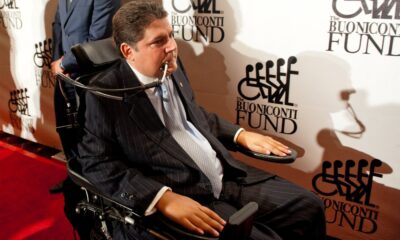
Marc Buoniconti’s Legacy: 40 Years Later, Lives Transformed
-

 Lifestyle4 months ago
Kelsea Ballerini Launches ‘Burn the Baggage’ Candle with Ranger Station
-

 Top Stories3 months ago
Carson Wentz Out for Season After Shoulder Surgery: Urgent Update