
Science
SoftBank and Yaskawa Unveil Plans for Advanced ‘Physical AI’ Robots

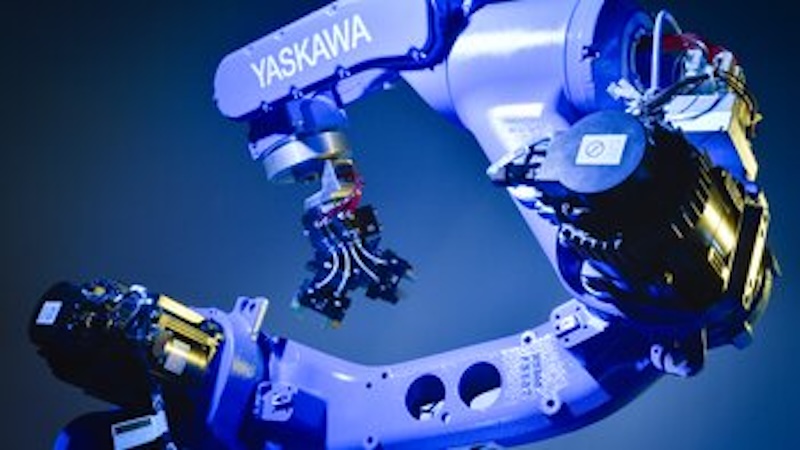
SoftBank and Yaskawa Electric have entered into a memorandum of understanding to collaboratively develop a new category of robots termed “Physical AI.” This initiative aims to integrate advanced decision-making capabilities with flexible, multi-purpose functionalities suited for office environments. The partnership merges SoftBank’s AI-RAN initiative with Yaskawa Electric’s expertise in robotics and motion control.
The companies assert that their collaboration is particularly relevant as Japan grapples with significant labour shortages and demographic challenges. The goal is to accelerate the “social implementation” of these robots, which are designed to enhance operational efficiency in complex business environments. As a preliminary step, SoftBank and Yaskawa have created a use case for an office-oriented robot that can seamlessly integrate with building management systems, utilizing AI powered by Multi-access Edge Computing (MEC).
Addressing Japan’s Automation Needs
Japan’s pressing demand for automation in various settings, including offices, schools, hospitals, and retail spaces, drives this partnership. Traditional robots have been limited to performing specific tasks, but the new system developed by SoftBank and Yaskawa enables real-time integration of multiple data streams. This facilitates a broader range of tasks, allowing robots to operate with what the companies describe as “multi-skilled functionality.”
The integration of SoftBank’s AI-RAN with Yaskawa’s robotics technologies aims to establish a domestically developed AI infrastructure, promoting innovation within Japan. The companies envision robots capable of advanced reasoning, thereby expanding the scope of tasks they can safely perform alongside humans in shared environments.
Innovative Technologies and System Design
Yaskawa Electric brings to the partnership its extensive experience in precision motion control and industrial robotics. The company is in the process of developing an autonomous robot known as Motoman Next, which will leverage AI for enhanced decision-making and operational flexibility. In parallel, SoftBank is contributing its MEC environment and AI-RAN capabilities, allowing for low-latency processing of substantial volumes of sensor and camera data. This provides the robots with an “external perspective” for better situational awareness.
Additionally, SoftBank has developed a Vision-Language Model (VLM) that functions as the MEC-based AI responsible for generating tasks. Complementing this, Yaskawa has created a Vision-Language Action (VLA) system, which translates the VLM’s directives into precise robotic movements. The integrated system architecture includes a next-generation building management system, a MEC AI layer, and Robot AI, enabling coordinated real-time decision-making. This allows robots to perform tasks such as identifying and retrieving specific items, like a smartphone, from an office shelf while responding to unexpected occurrences within the environment.
The partnership aims to extend beyond traditional automation frameworks by merging robotics with advanced communication infrastructure. The companies plan to showcase their innovative use case at Yaskawa’s booth during the upcoming 2025 International Robot Exhibition (iREX 2025), scheduled to take place from December 3 to 6 in Tokyo.
As the collaboration progresses, SoftBank and Yaskawa intend to continue advancing technologies that promote safe and collaborative work environments for humans and robots. By harnessing AI and communication technologies, the partnership seeks to broaden the spectrum of tasks robots can undertake, ultimately redefining automation in everyday workplaces.

Cosmic Mystery Deepens: Where Are the Universe’s Defects?

Lady Bulldogs Shine in Postseason Awards Following Final Four Run

CALV Hosts Essential Class for Local Real Estate Professionals

Urgent Alert: “Spaving” Surges as Shoppers Overspend Online

Jefferies Initiates Coverage on Insmed with “Buy” Rating

Three Dog Night to Perform with Ambrosia at Mayo Civic Center

Urgent Announcement: Charles M. Payment Passes Away at 78

Houston Education Foundation Donates $4,592 for Student Programs

Beeks Financial Cloud Shares Drop 7% Amid Increased Trading Volume

Foreign Inflows into Japan Stocks Surge to ¥1.34 Trillion

University of Hawaiʻi Joins $25.6M AI Project to Monitor Disasters

Sydney Sweeney Embraces Body Positivity Amid Hollywood Challenges

Hudson Williams Gains Popularity as Breakout Star on Heated Rivalry

Urgent Farewell: Joleen Chaney Leaves Legacy at KFOR

Boeing’s Merger with McDonnell Douglas: A Strategic Move Explained

$1.25M Grant Advances Hawaiʻi’s Real-Time Hazard Monitoring

Derrick Dove and ABAC Band Set for Free Americana Concert

BOYNEXTDOOR’s Jaehyun Faces Backlash Amid BTS-TWICE Controversy
-
Business9 months ago
Foreign Inflows into Japan Stocks Surge to ¥1.34 Trillion
-
Science9 months ago
University of Hawaiʻi Joins $25.6M AI Project to Monitor Disasters
-
 Entertainment9 months ago
Sydney Sweeney Embraces Body Positivity Amid Hollywood Challenges
-
 Entertainment7 months ago
Hudson Williams Gains Popularity as Breakout Star on Heated Rivalry
-
 Top Stories8 months ago
Urgent Farewell: Joleen Chaney Leaves Legacy at KFOR
-
 World9 months ago
Boeing’s Merger with McDonnell Douglas: A Strategic Move Explained
-
 Science7 months ago
$1.25M Grant Advances Hawaiʻi’s Real-Time Hazard Monitoring
-
 Entertainment8 months ago
Derrick Dove and ABAC Band Set for Free Americana Concert
-
 Top Stories9 months ago
BOYNEXTDOOR’s Jaehyun Faces Backlash Amid BTS-TWICE Controversy
-

 Health6 months ago
Bodybuilder Eugene Teo Transitions to Mindful Movement for Health
-

 World6 months ago
San Francisco Airport to Host 16 Nonstop Airlines to Europe in 2026
-

 Top Stories7 months ago
National Coast Guard Museum Set to Open in 2027 After Funding Secured